

Join 8,000 Iceland Travel Fans & Unlock Exclusive Discounts
Get Iceland advice straight from a local. Subscribe and unlock exclusive discounts from 50+ hand-picked Icelandic operators.
- ✔ Instant access to exclusive discount codes
- ✔ Savings on tours, car, and camper rentals
- ✔ Tips and inspiration for planning your Iceland trip
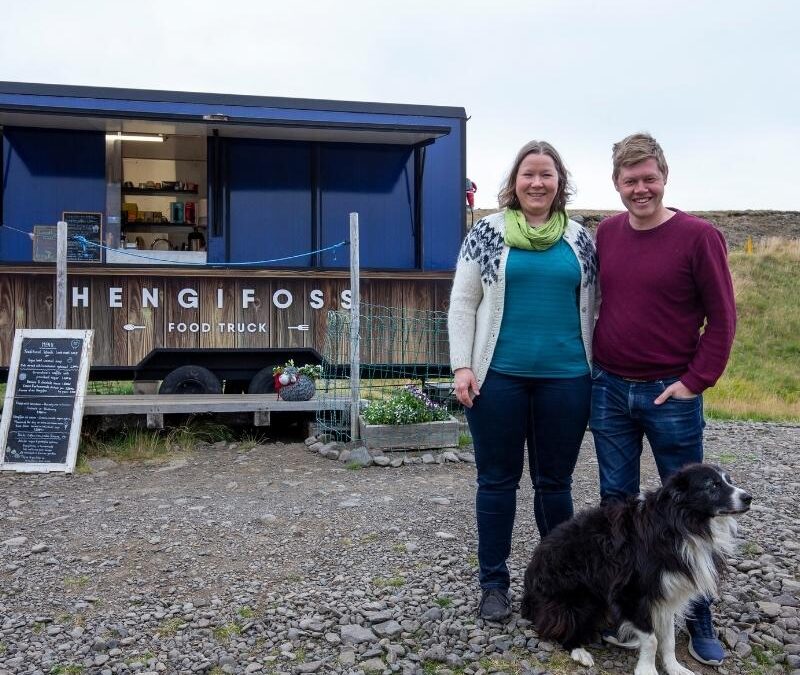
Icelanders used to milk their sheep. For centuries, sheep milk was a common food in this country; then the tradition died out almost completely as farming shifted to meat and wool. A German cultural anthropologist living on the innermost farm in Fljótsdalur, East Iceland, brought it back.
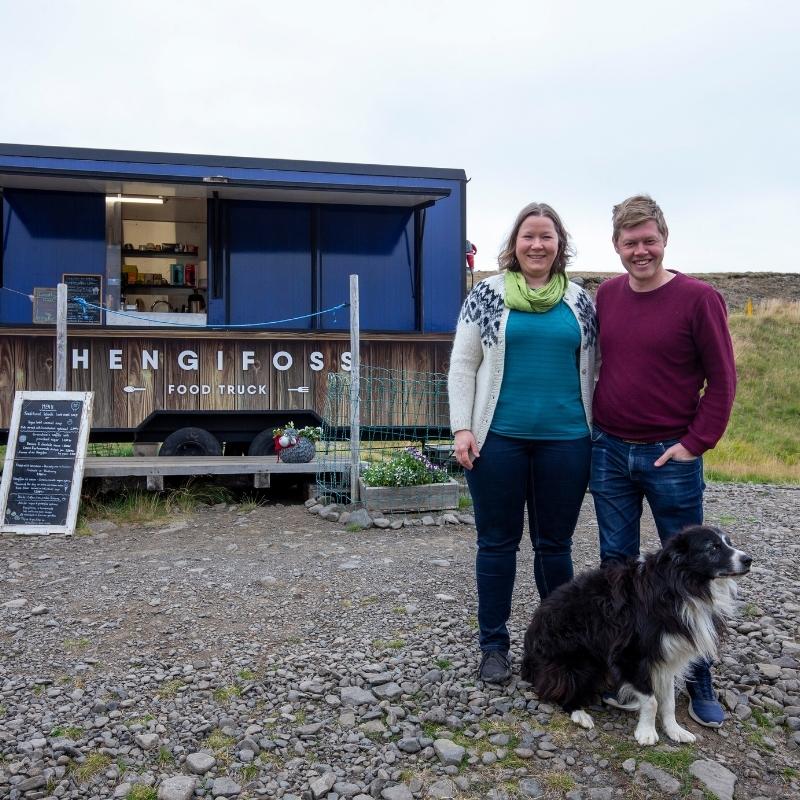
Ann-Marie Schlutz came to Iceland in 2015 to visit her cousin in Egilsstaðir and never really left. On the family farm where she now lives, she asked a simple question: with around 360 sheep on the property, why weren’t they making sheep cheese? So she hand-milked a few ewes, hauled 30 liters to a dairy farmer in West Iceland who taught her to make cheese, and founded Sauðagull in 2019. The name means “sheep’s gold.” Icelanders once called it the coins Breton sailors paid for lamb, back when real money was a rare sight in these parts.
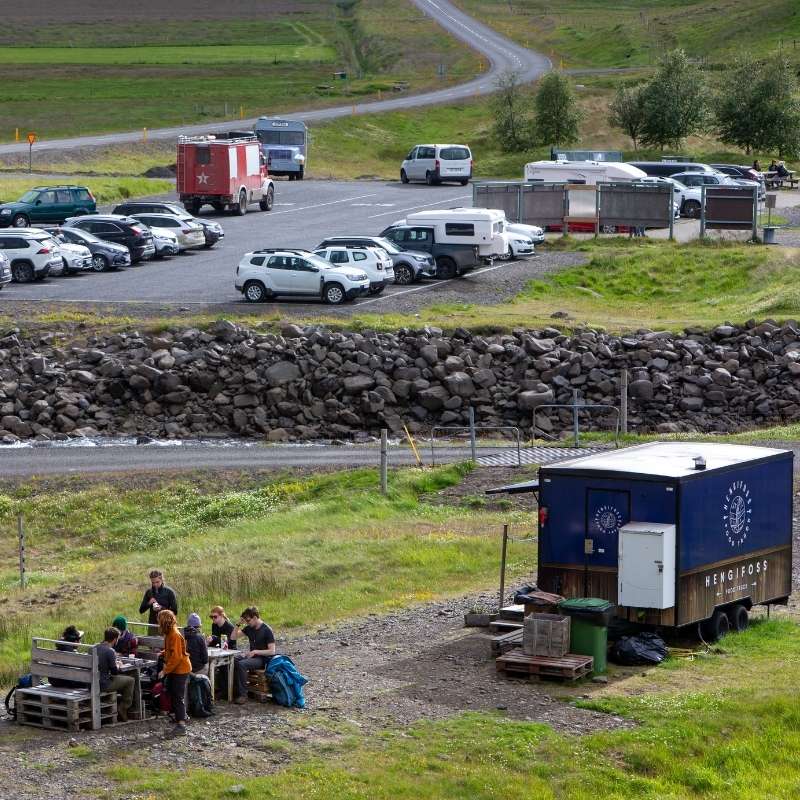
Why this matters to you as a traveler: Ann-Marie runs the Hengifoss food truck at Hengifoss, the 128-meter waterfall in Fljótsdalur and one of the most popular stops in East Iceland. The hike up to the falls takes 40 to 60 minutes each way, past the basalt columns of Litlanesfoss, and the truck sits a two-minute walk across the bridge from the parking lot.

Sheep milk ice cream made from the farm next door, after a proper walk in one of the finest valleys in the East- that is the kind of reward I can get behind. She also makes chocolates from the milk, and cheese in the fall for the Christmas markets. She milks her ewes only during lambing season and gets about 400 liters a year, so this is small-batch in the most literal sense. Her biggest hit, however, is GÚDD ÍS – ‘góði ísinn’, or the good ice cream. GÚDD ÍS is not made from sheep milk; it comes in many flavors, such as Cappuccino, Mango, and Raspberry.

The food is just not about ice cream. You can also find food inspired by local traditions and Ann-Marie’s German roots. Get traditional lamb soup with home-baked Icelandic rye bread. Waffles after Ann-Marie’s grandmother’s recipe. Feast on smoked lamb sandwiches, and browse local souvenirs.
Hengifoss: what to know before you go
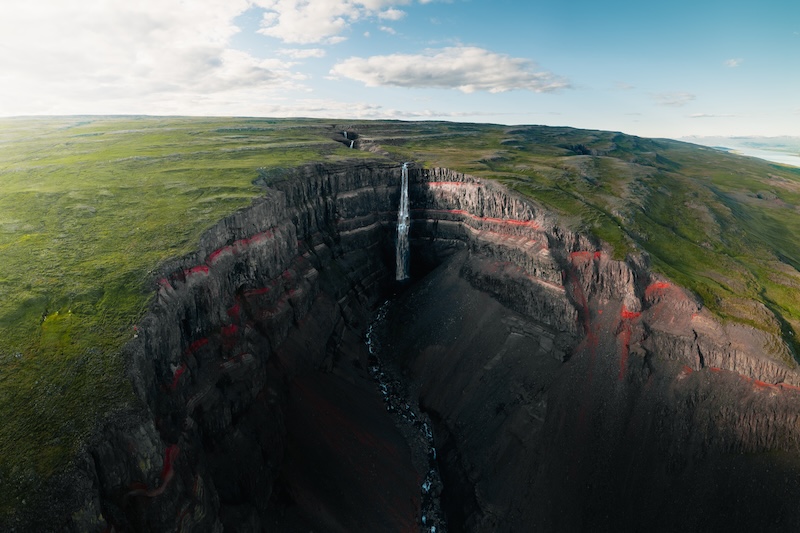
Hengifoss drops 128 meters at the head of Fljótsdalur, and it is one of the most visited stops in East Iceland. The walk up takes 40 to 60 minutes each way, and it passes Litlanesfoss and its basalt columns on the way — worth the stop on its own. The path is steep in places.
- Footwear: hiking shoes with a good sole. Trainers will get you up there, but people slip on the descent.
- Poles: Ann-Marie recommends them for the way down more than the way up.
- Timing: early or late thins out the traffic, but the crowds here are nothing like the South Coast. Do not let it dictate your day.
- The food truck: two minutes on foot from the parking lot, across the bridge. Open from May to the end of September, with the tail of the season depending on the weather.
- Sheep milk ice cream: in stock the whole season. The GÚDD ÍS flavors — cappuccino, mango, raspberry — are cow milk and sit alongside it.
Worth adding to the day
Most people drive straight back to Egilsstaðir after the hike. Two places in the valley are worth the detour: the Wilderness Center (Óbyggðasetur), with an interactive exhibition on how people survived out here, and Skriðuklaustur, which covers monastery history and Iceland’s literary tradition. If you are in the valley in mid-September, Melarétt is the largest sheep round-up of its kind still running in the East.
I asked Ann-Marie about the milk, the ice cream, and, since she lives in one of the most beautiful corners of the country, what she recommends to visitors who make it out to Fljótsdalur.

You live at the innermost inhabited farm in Fljótsdalur. What do most visitors to Hengifoss miss because they drive straight back to Egilsstaðir after the hike?
The valley offers a chance to learn about and experience authentic Icelandic culture beyond its magical nature. The Wilderness Center (Óbyggðasetur) has a unique exhibition about life in these remote areas in the past. You can experience through an interactive exhibition – one of a kind- how people survived, how they made a living, how they used everything they had, and what it meant to be an Icelander in this region under harsh conditions. After the exhibition, you can enjoy a traditional cake buffet and food shared in a homestyle kitchen.
Skriduklaustur monastery is another wonderful cultural experience. Apart from being a unique house in Iceland, it offers you a glimpse into the rich literary culture Iceland has to offer as well as the history of monasteries in Iceland. For those who want to learn and experience authentic Icelandic culture, I highly recommend visiting these places.
Iceland is not only about nature; it’s also about the people, history, and culture, and Fljótsdalur, with calmer tourism, offers a real connection to that part of Iceland. And if you are here in mid september, don’t miss out on our “Melarétt”, the biggest sheep round-up and sorting of its kind in the east still today!
What should people order at the food truck, and is there a flavor you’re especially proud of?
I am very proud of all my ice creams, be it sheep milk or my GÚDD ÍS ice creams. Experience what ice cream should really taste and look like: full, intense flavor without artificial flavorings, colorants, or preservatives. Flavors I used to avoid in ice cream shops are now my favorites, such as raspberry sorbet or mango sorbet.
Sheep milk ice cream: what does it actually taste like compared to regular ice cream?
Even though it has a higher fat content, sheep milk ice cream tastes fresher than cow milk. You get a slight hint of the sheep at the end if you eat it consciously, but it is naturally sweet milk, so you don’t need to be afraid of it being very strong.
For someone doing the Hengifoss hike, any practical advice? Best time of day, how to dress, footwear, how to beat the July crowds?
Wear proper shoes, hiking shoes at best but with a good profile. Take hiking sticks with you for the way down, as it can be steep in parts. To beat the crowds, be early or late- but honestly, the crowds at Hengifoss are not comparable to any crowds in the attractions in the south, so don’t worry too much about it.
Where do you eat when you go out in East Iceland? Give us your local picks.
I like a lot of places in the East because most of us really appreciate local ingredients! In Egilsstadir, I like Askur Pizzeria. The Fish and meat shop is really popular and very local. Also, Bókakaffi offers authentic local vibes and home food.
In Borgarfjörður, I would try Álfa cafe for a local vibe and food; in Neskaupstaður, there is the Beitiskúrinn, right by the fjord. I love sitting by the water!
In Seyðisfjörður, there’s a rich selection of great places, with the newest addition being another food truck in the garden of a Paraguayan couple called La Hamaca y la luna. Fresh and great-tasting fusion food.
But also Skaftafell, Aldan, NorðAustur Sushi– they are all really, really good! I could continue the list- just go beyond the hot dog at the gas station, even though that is a very authentic thing to do in Iceland.
You came here as a traveler in 2015. What did East Iceland give you that the famous South Coast couldn’t?
The South Coast to me feels like becoming a mainstream tourist destination, mass tourism oriented, honestly. There are beautiful spots, don’t misunderstand. But for me, the east still offers the real Iceland. The rural culture, friendly and welcoming people, real cultural experiences, and you can still be alone if you want. It’s much calmer than the hustle and bustle of Reykjavik and the south coast. The places here feel more authentic, done with heart and care, as you can tell in our food places as well.
What’s the story behind reviving sheep milking, and can visitors see or taste anything else made from sheep milk in Iceland?
It all started because I was missing a broader selection of cheeses in the shops. In 2016, there wasn’t much more available than bread cheese and a few others. I really like feta, so I thought- why isn’t anyone doing it with all these sheep around? Now, years later, of course I have learned the reasons behind – the sheep breeding was changed over to a focus on the meat and wool, for example, so they give very little milk. But I saw the potential in it, and ideally I wanted to show the value of sheep milk, compared to meat, to support a struggling sheep farming culture in Iceland.
I am very happy to see that, over the years, others have shown real interest in what I am doing and are trying to start their own enterprises based on sheep’s milk. Maybe not many yet, but slowly, slowly, maybe we can revive it on a broader scale. Sheep milk, after all, ranks third in nutritional value in comparison to other milks, far before cow’s or goat’s milk.
Have a look around the island to find the little niche producers in the north, who are just starting to work with sheep’s milk. They might have some cheese for you. But if not, don’t be disappointed. Buy a local yarn and knit or crochet something from it – that is a great support of and part of Icelandic culture just as well!
When is the food truck open, and can people count on the sheep milk products being in stock, or should they come early in the season?
The food truck is typically open from May to at least the end of September; the latter part of the season always depends on the weather. The sheep milk ice cream is always available throughout the whole season.
Hengifoss and the food truck: common questions
How long does the Hengifoss hike take?
Between 40 and 60 minutes each way, depending on your pace and how long you stop at Litlanesfoss on the way up. Allow two to three hours for the round trip if you want to enjoy it rather than march it.
How hard is the hike, and what should I wear?
It is steep in parts, and the descent is the tricky half. Hiking shoes with a good grip are the sensible choice, and Ann-Marie Schlutz, who runs the food truck at the trailhead, recommends hiking poles for coming back down.
Is there food at Hengifoss?
Yes. The Hengifoss food truck sits a two-minute walk from the parking lot, across the bridge. Alongside the ice cream you can get lamb soup with home-baked rye bread, smoked lamb sandwiches, and waffles made to Ann-Marie’s grandmother’s recipe.
When is the Hengifoss food truck open?
From May until at least the end of September. How far into the autumn it runs depends on the weather.
What does sheep milk ice cream taste like?
Fresher than cow milk ice cream, despite the higher fat content. Ann-Marie describes a slight hint of sheep at the finish if you are paying attention, but the milk is naturally sweet, so it is not a strong or gamey flavour.
Can I buy Icelandic sheep milk products anywhere else?
Barely. Sauðagull makes around 400 litres a year, milking only during lambing season, and a handful of small producers in the north have started working with sheep milk. If you cannot find any, buy local yarn instead — Ann-Marie’s own suggestion.
What else is worth seeing in Fljótsdalur?
The Wilderness Center (Óbyggðasetur) and Skriduklaustur are both in the valley and both worth an hour or two. In mid-September, Melarétt is the largest sheep round-up of its kind still held in East Iceland.
Did you enjoy this article?
Get more Iceland insight — straight from a local who's lived here his entire life
Join 8,000 travellers getting honest Iceland advice and unlock exclusive discount codes from 50+ hand-picked Icelandic operators.- ✔ Instant access to exclusive discount codes
- ✔ Savings on tours, car and camper rentals
- ✔ Tips and inspiration for planning your Iceland trip
No spam. Unsubscribe any time.