

Updated by Jón Heiðar, editor of Stuck in Iceland. I have lived here my whole life and have been helping travellers plan their trips since 2012.
Planning a trip to Iceland can feel like a lot. When should you come? How many days do you need? Do you rent a car or take tours? What on earth do you pack? I have put everything you actually need in one place, in the order you will need it — from picking your dates to saving money on the ground. Work through it from the top, or jump to the bit you need.
What’s on this page
Join 8,000 Iceland travel fans & unlock exclusive discounts
Get Iceland advice straight from a local. Subscribe, and you’ll instantly unlock discount codes from 50+ hand-picked Icelandic operators — the same people I’d send my own family to.
- ✔ Instant access to exclusive discount codes
- ✔ Savings on tours, car, and camper rentals
- ✔ Practical tips and inspiration, about once a week
When to visit Iceland
There is no single best time — it depends on what you’re after. Here’s the honest trade-off.

Summer (June to August)
Long days, the famous midnight sun, and almost everything open — including the highland F-roads, which usually open sometime in mid-to-late June and close again in September. The roads are at their easiest, the puffins are in, and you can drive the whole Ring Road comfortably. The catch: this is high season, so prices are higher and the popular spots are busier. If you’re coming in the summer, book your accommodation well in advance.
Shoulder season (May and September)
My quiet favorite. You still get plenty of daylight, most things are open, prices ease off a little, and there are fewer people at the big sights. By late September, you even have a shot at the northern lights.
Winter (October to March)
This is northern lights season, and the snowy landscapes are something else. But days are short, the weather can be rough, and some routes — especially the highlands — are closed or only sensible in a proper 4×4 with an experienced driver. If you come in winter, build in spare days and don’t over-pack your itinerary.
One thing to get straight early: you cannot see the northern lights and the midnight sun on the same trip. The lights need dark skies (roughly September to April); the midnight sun is a summer thing. Pick your priority before you book your dates.
How many days do you need?
A rough guide, based on what I see works well:
- 3–4 days: Reykjavík, the Golden Circle, and a taste of the South Coast. Plenty for a long weekend.
- 5–7 days: Enough to do the Ring Road around the whole island without rushing it (this is the sweet spot for most first-timers).
- 8–10+ days: Ring Road plus detours — the Westfjords, the Diamond Circle in the north, or time in the highlands.
My honest advice: leave gaps. Iceland is a big country, the weather will reshuffle your plans, and the best moments are usually the unplanned ones you stumble onto between the famous stops.
Getting to Iceland
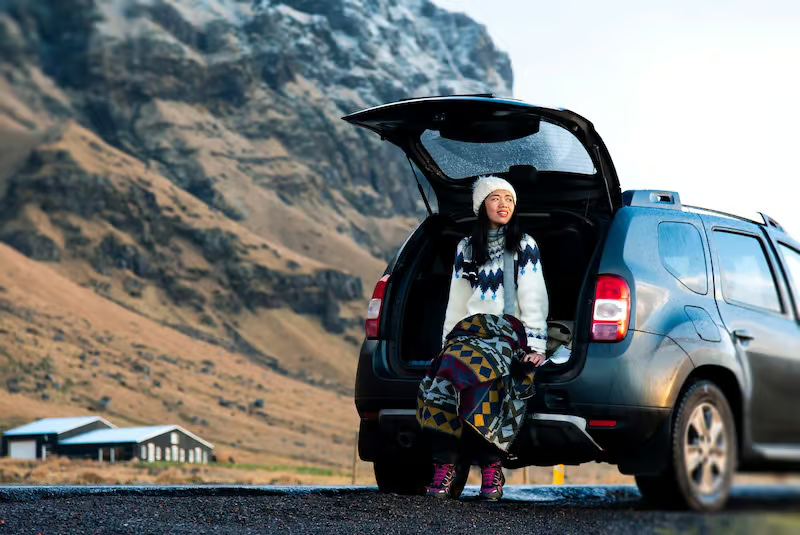
Almost everyone flies into Keflavík International Airport (KEF), about 45 minutes from Reykjavík. From there you have three sensible options into town: pick up your rental car at the airport, pre-book an airport transfer, or take a scheduled bus.
Visas: Iceland is part of the Schengen Area. Many visitors — including those from the US, UK, Canada, and the EU/EEA — don’t need a visa for a short stay, but it depends on your nationality, and the EU is rolling out a new ETIAS travel authorization. Check the official sources for what applies to you before you book.
Getting around Iceland
The most rewarding way to see Iceland is to rent a car or a camper van and explore on your own terms. (My newsletter subscribers get discount codes on both.) If you’d rather not drive, you can build a great trip out of guided day tours instead.
Driving safely
Our roads are narrow, with plenty of single-lane bridges, so take it easy and don’t speed. If you see something you want to photograph, stop somewhere safe and pull right off the road. Far too many travelers stop in the middle of the road for a photo and put everyone at risk.
Driving in winter
Winter driving means low visibility, ice, high winds, and snowdrifts. Always check the weather forecast and road conditions before a long journey, and make sure your tires are winter-ready. Get a 4×4 if you can, and don’t skimp on the car — it’s not the place to save money.
The one rule everyone must follow
No off-road driving. It’s illegal, it scars the land for decades, and the police will not hesitate to hand out heavy fines. I wish them every success with that, by the way.

Where to stay
Book your accommodation in advance, especially in the summer high season — the good-value places fill up fast. Traveling with little ones? I’ve put together a separate guide on visiting Iceland with kids, which is a genuinely great family destination.
What to pack & how to dress
Iceland is called Iceland for a reason, and the weather changes by the hour. The whole game is layers, and the golden rule is simple: never wear cotton as a base layer, summer or winter. Start with non-itchy wool like merino, add fleece or thicker wool, and finish with a windproof, waterproof shell. Add waterproof shoes, a warm hat, scarf, and gloves — yes, even in high summer — plus sunglasses and sunscreen for those bright days.
This isn’t fussiness. Wearing jeans or cotton on a summer highland hike has proven fatal here more than once. Cold rain plus strong wind is more dangerous than a quiet frost.
Want the full breakdown? See my guide on how to dress for Iceland. And if you’d rather not haul a suitcase of gear across the Atlantic, you can rent outdoor clothing here and save the luggage space.
Money & paying for things
The currency is the Icelandic króna (ISK). A few things that save people grief:
- Cards work almost everywhere. Iceland is close to a cashless society, so you can pay by credit or debit card for nearly everything — just don’t forget your PIN, you’ll need it. See my full guide on how to pay for things in Iceland.
- Tipping isn’t expected. Service is included, so there’s no need to tip on top. It’s always welcome, never required.
- Drink the tap water. It’s some of the best in the world and it’s free. Don’t waste money on bottled water — bring a refillable bottle instead.
- Alcohol is sold in state shops. Beer, wine and spirits come from the government Vínbúðin stores (or bars and restaurants), not the supermarket. The legal age is 20.
Iceland isn’t cheap, but you can absolutely keep costs sensible. My Iceland on a budget guide has the practical money-savers — cheap eats, low-cost adventures and smart planning.
Quick reminder: the discount codes from my 50+ partner operators are free for subscribers. Sign up and unlock them here before you start booking — it’s the easiest money you’ll save on the whole trip.
Staying safe & connected
Before any long drive or hike, make it a habit to check three things: the weather forecast, the road conditions, and the advice on Safetravel.is (also on Facebook). My fuller safety guide goes into more detail.
Connectivity: Google Maps works almost everywhere along the Ring Road. Visitors from outside the European Economic Area should consider an eSIM or a Wi-Fi hotspot; those within the EEA usually won’t face high roaming charges. A universal power adapter is worth packing too.
Respecting Icelandic nature
We’re letting you into our home, so please treat it gently:
- Stay on marked paths and roads — no off-road driving, ever.
- Don’t damage sensitive plants. Our moss takes decades to grow back.
- Don’t disturb animals or birds, and don’t litter. Take nothing but pictures.
- Consider a hybrid or electric rental to cut your footprint, and read my guide on a carbon-neutral Iceland trip.
- Take a minute to sign the Icelandic Pledge.

What to do
Soak in geothermal water
The local swimming pools are the heart of Icelandic social life, and a cheap, wonderful way to spend an evening — start with my guide to Iceland’s swimming pools. For something more special, I partner with Krauma, GeoSea, the Secret Lagoon and Vök Baths — and subscribers get discount codes for all of them.
Chase the northern lights
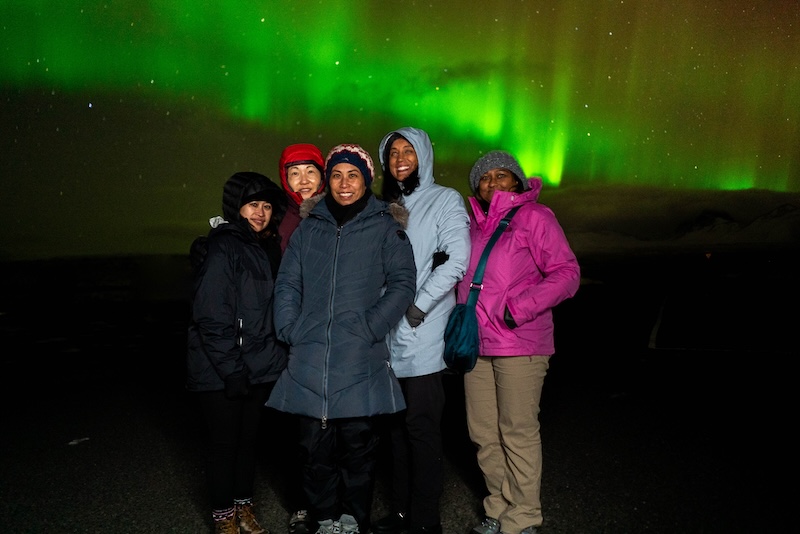
The lights are elusive, so don’t stake everything on one night — give yourself several. Use the official aurora forecast and the Iceland at Night service to improve your odds. And please, if you’re out at night, wear something reflective: I once nearly hit a photographer dressed head to toe in black, hunched over his tripod on the shoulder of a pitch-dark road. I saw him with seconds to spare.
See whales, hike, and book tours
You can go whale watching, hiking, and plenty more. If you join a tour, book ones with a high review score and a high volume of reviews — I’ve curated a list of top-rated tours to make that easier. Better still, use my exclusive discount codes: I only work with operators I know and trust, people with a real passion for what they do.
Photos & drones
If photography is your thing, bring two cameras if you can — one wide-angle for the landscapes, one long lens for wildlife. But never take risks for a shot. I’ve watched people perched on cliff edges and right at the water’s edge at Reynisfjara black beach for a selfie. It isn’t worth your life.
Flying a drone? Check the forecast and don’t fly in high wind. Keep clear of waterfalls and birds (the birds will take on a drone, believe me), bring spare batteries, and follow the drone rules.
Go deeper: meet the locals
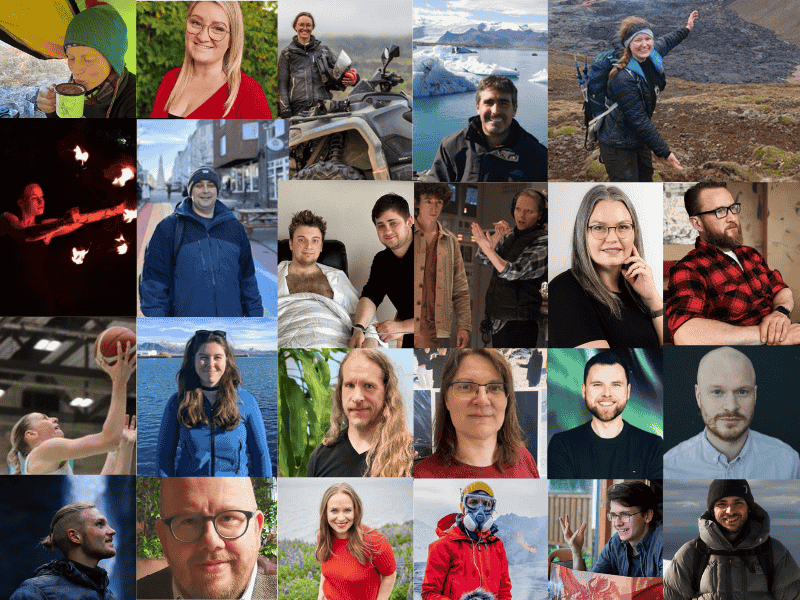
Iceland’s landscapes are only half the story — the people and culture are the rest. Over the years, I’ve published more than 200 interviews with Icelanders and travelers, full of insider tips on customs, festivals, and the spots that don’t make the postcards. They’re a lovely way to travel a little deeper.
Ready-made road trip plans
- Golden Circle — the perfect introduction to Iceland.
- The Ring Road — drive the whole island.
- Diamond Circle — head north for the big scenery.
- South Coast — the rugged south shore has it all.
Before you go — grab your discount codes
I’ve run Stuck in Iceland on my own since 2012, and it stays free because subscribers use my partner discounts and booking links. Join 8,000 readers, unlock the codes from 50+ operators, and you’ll save far more than the price of the newsletter (which is nothing). Subscribe & unlock the discounts
You can also support the magazine by renting a car, a camper, or booking a hotel through my links. Thank you — it genuinely keeps the lights on.
Handy resources for planning
- Safetravel.is — read and follow the safety advice.
- Weather forecast — changeable, so check it often, especially in winter.
- Road conditions — essential before any winter drive.
- Aurora forecast — for hunting the northern lights.
- Public buses (Strætó) — a cheaper, greener way to get around.
- Every hot spring & pool in Iceland — my full directory.
- Iceland travel FAQ — quick answers to common questions.
That’s the lot. Plan loosely, dress in layers, drink the tap water, and don’t drive off-road. Have a wonderful trip — and tell them Jón sent you.
Planning a trip to Iceland? Here are honest, local answers to the questions I’m asked most — straight from someone who lives here.
Planning Your Trip
6 questions
When is the best time to visit Iceland?
There’s no single best time — it depends on what you’re after. Summer (June–August) brings the midnight sun, the easiest driving, and open highland roads, but higher prices and more people. May and September are my quiet favourites: good daylight, fewer crowds, slightly lower prices. Winter (October–March) is for the northern lights and snowy scenery, but the days are short and the weather can be rough. One thing to settle early: you can’t see the northern lights and the midnight sun on the same trip.
How many days do I need in Iceland?
For a long weekend, 3–4 days covers Reykjavík, the Golden Circle and a taste of the South Coast. Five to seven days is the sweet spot for driving the full Ring Road without rushing. With 8–10 days or more you can add the Westfjords, the Diamond Circle or the highlands. My honest advice: leave gaps — the best moments are usually the unplanned ones.
How do I get from Keflavík Airport to Reykjavík?
Keflavík is about 45 minutes from the city. You have three sensible options: pick up your rental car at the airport, pre-book an airport transfer, or take a scheduled bus. Taxis work but are the most expensive choice. In winter, be ready for icy or windy conditions if you’re driving yourself.
Do I need a visa to visit Iceland?
Iceland is part of the Schengen Area. Many visitors — including from the US, UK, Canada and the EU/EEA — don’t need a visa for a short stay, but it depends on your nationality, and the EU is rolling out a new ETIAS travel authorisation. Check the official sources for what applies to you before you book.
Do I need to book accommodation and tours in advance?
Yes, especially in the summer high season, when the good-value places fill up fast — book accommodation early. In winter there’s more room, but popular northern lights tours and airport transfers still sell out, so book those ahead too.
Is Iceland good for families with children?
It’s a great family destination. Kids love the whale watching, glacier scenery, geothermal pools and the midnight sun. Just dress them in warm, layered, waterproof clothing — merino wool as a base layer, never cotton — and good waterproof shoes. I’ve put together a fuller guide to visiting Iceland with kids.
Getting Around
4 questions
Should I rent a car or take guided tours?
The most rewarding way to see Iceland is to rent a car or a camper van and go at your own pace (my newsletter subscribers get discount codes on both). If you’d rather not drive, you can build a fine trip out of guided day tours instead.
What are the main safety rules for driving in Iceland?
Our roads are narrow, with plenty of single-lane bridges, so take it easy and don’t speed. Never stop in the road for a photo — pull right off at a safe spot. Always check the weather and road conditions before a long drive, and read my full safety guide.
What is driving in Iceland like in winter?
Expect low visibility, ice, high winds and snowdrifts. Make sure your tyres suit winter conditions, get a 4×4 if you can, and don’t skimp on the car — it’s not the place to save money. Check road.is and the forecast before every journey, and build spare days into your plan.
Can I drive off-road in Iceland?
No — off-road driving is illegal and carries heavy fines. It scars the land for decades, especially the moss, which takes a very long time to recover. Stay on marked roads and tracks at all times.
Weather & Packing
3 questions
What is the weather like in Iceland?
Changeable — sometimes within a single hour. Be ready for sunshine, rain, strong wind and even snow in one day, in any season. Follow the forecast closely, but know that predicting Icelandic weather is sometimes near impossible.
What should I pack and wear?
The whole game is layers, and the golden rule is never wear cotton as a base layer, summer or winter. Start with merino wool, add fleece or thicker wool, and finish with a windproof, waterproof shell. Add waterproof shoes, a warm hat, gloves and a scarf — even in high summer — plus sunglasses and sunscreen. See my full guide on how to dress for Iceland.
Can I rent outdoor clothing instead of packing it?
Yes, and it’s a smart move — you save luggage space and often money. You can rent jackets and full outdoor gear here, and newsletter subscribers get a discount.
Money & Practicalities
6 questions
Can I use credit cards everywhere in Iceland?
Yes. Iceland is close to a cashless society, so you can pay by credit or debit card for almost everything, even in remote spots. Just don’t forget your PIN — you’ll need it. Here’s my full guide on how to pay for things in Iceland.
Do I need to tip in Iceland?
No. Service is included, so tipping isn’t expected anywhere. It’s always welcome, but never required — don’t feel you have to add anything on top.
Is the tap water safe to drink?
It’s some of the best water in the world, and it’s free. Don’t waste money on bottled water — bring a refillable bottle and fill it from the tap.
Where can I buy alcohol in Iceland?
Beer, wine and spirits are sold in the state-run Vínbúðin shops, or in bars and restaurants — not in the supermarket. The legal drinking age is 20.
Will my phone work, and how is navigation?
Google Maps works almost everywhere along the Ring Road. Visitors from within the EEA won’t face high roaming charges; those from outside should consider an eSIM or a Wi-Fi hotspot. Download offline maps before heading into remote areas where signal can drop.
Do I need a power adapter?
Iceland uses the European Type F plug at 230V/50Hz. Travellers from North America will need a plug adapter and, for some devices, a voltage converter. A universal travel adapter is the simplest solution.
Things to Do
3 questions
When can I see the northern lights?
From roughly September to April, when the nights are long and dark. They’re elusive, so give yourself several nights rather than staking everything on one. Use the official aurora forecast and the Iceland at Night service to improve your odds — and if you’re out at night, please wear something reflective near roads.
What’s the best way to soak in geothermal water?
The local swimming pools are the heart of Icelandic life and a cheap, wonderful evening out. For something more special, I partner with Krauma, GeoSea, the Secret Lagoon and Vök Baths — and subscribers get discount codes for all of them. One rule: shower thoroughly before you get in. It’s non-negotiable here.
How do I choose good tours, and save money on them?
Book tours with both a high review score and a high volume of reviews, and book online in advance to save stress. Better still, use my exclusive discount codes — I only work with operators I know and trust. Subscribe to the free newsletter and you’ll unlock codes for 50+ Icelandic operators.