

Join 8,000 Iceland Travel Fans & Unlock Exclusive Discounts
Get Iceland advice straight from a local. Subscribe and unlock exclusive discounts from 50+ hand-picked Icelandic operators.
- ✔ Instant access to exclusive discount codes
- ✔ Savings on tours, car, and camper rentals
- ✔ Tips and inspiration for planning your Iceland trip
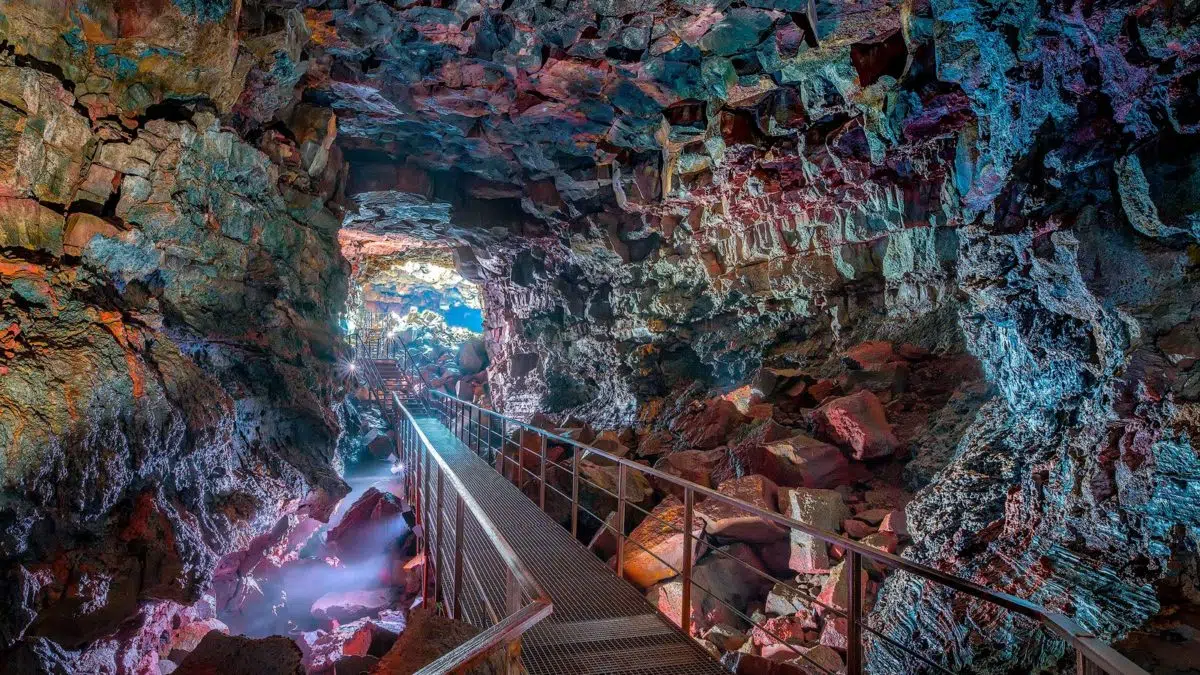
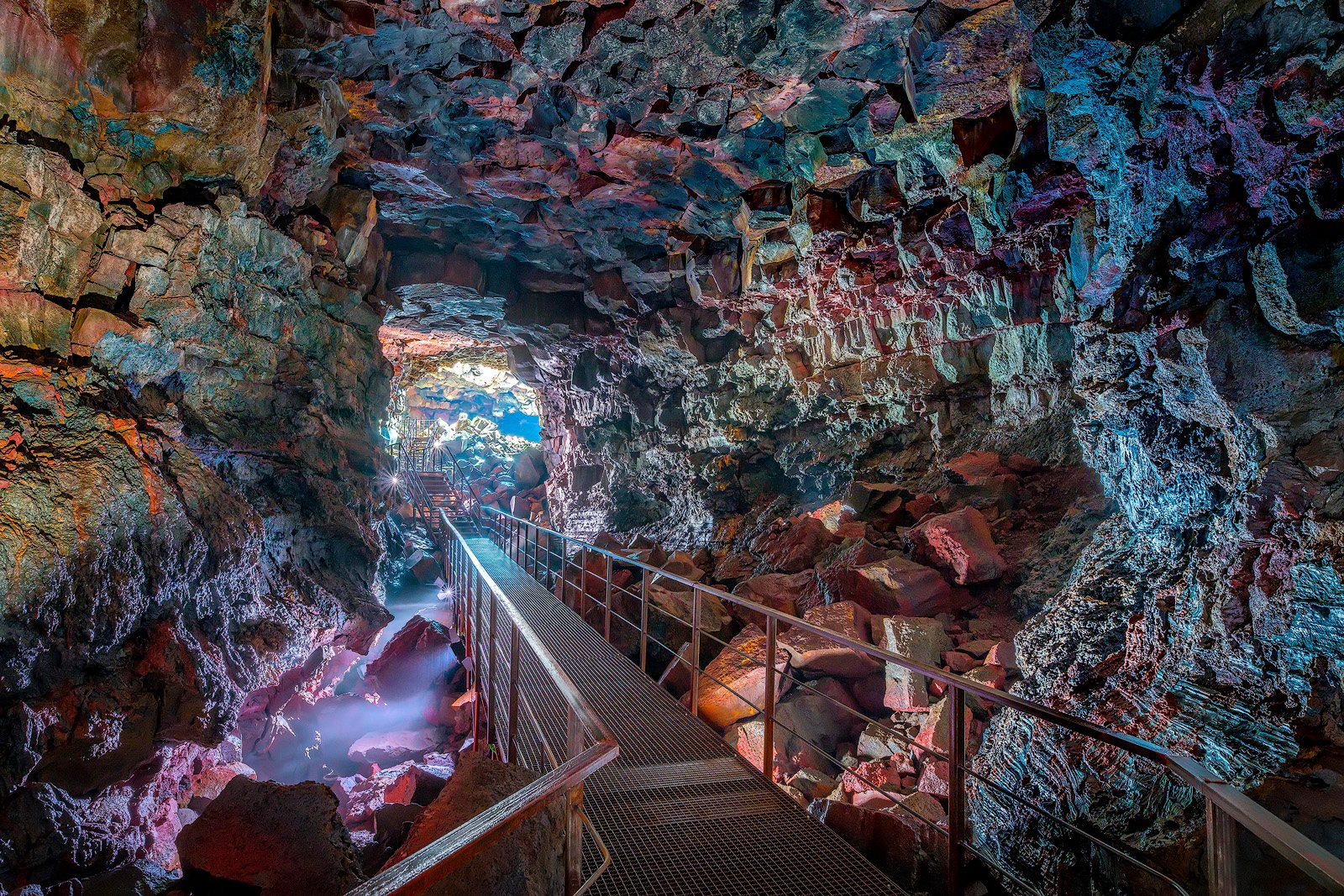
My wife, Hallveig Rúnarsdóttir, and I drove out to Raufarhólshellir on an ordinary afternoon, the way you do when something good sits 30 minutes from your front door, and you have finally run out of excuses. It is a lava tube — a cave left behind by a river of molten rock — and the company that runs it calls it the Lava Tunnel. You walk in through a hole in a hillside off the road to Þorlákshöfn, and within a few minutes you are standing under twelve meters of solid rock, looking at walls the color of rust and ice growing up from the floor like teeth.
It is one of the few places near Reykjavík where you can see the inside of an eruption without being fit, brave, or particularly organized. That is why I keep sending people there, and why the Lava Tunnel is one of my longest-standing travel partners. My readers get a discount on admission — more on that further down.
The Lava Tunnel at a glance
- What it is: Raufarhólshellir, a lava tube in the Leitahraun lava field, one of the longest and best-known lava caves in Iceland.
- Where: Off Route 39 (Þrengslavegur) in southwest Iceland, roughly 40 km from Reykjavík — a 30 to 40 minute drive.
- Size: About 1,360 meters of tunnel in total, with a main passage of some 900 meters. It is 10 to 30 meters wide and up to 10 meters from floor to ceiling.
- Age: Around 5,200 years old, formed in the Leitahraun eruption in the Bláfjöll mountain range.
- How long a visit takes: The standard walk-through is about an hour underground. The longer adventure tour into the far end of the cave takes most of a morning or afternoon.
- Who it suits: Anyone who can manage a raised steel walkway and a few steps. No caving experience needed. The deeper tour is a different matter — that one asks for reasonable fitness and balance.
- Open: All year. Winter is when the ice sculptures show up.
What a lava tunnel actually is
This is the part that surprises people, so it is worth two minutes.
When thin, runny lava pours downhill, the surface cools first and hardens into a crust. The lava underneath keeps flowing, insulated by its own roof, like water under river ice. When the eruption stops, the last of the molten rock drains away downhill and leaves the pipe standing empty. That empty pipe is Raufarhólshellir.
The eruption that made it happened about 5,200 years ago in the Bláfjöll range, southeast of the city, and produced a crater row and a lava field that reaches all the way to the sea at Þorlákshöfn. Stand inside the tunnel, and you are standing in the exact channel the lava took. You can read the flow on the walls — the horizontal lines are old lava levels, high-water marks left as the river drained. Further in, the tunnel splits into three smaller passages.
If you have watched the recent eruptions on the Reykjanes Peninsula on the news and wondered what all that glowing orange rock is doing under the crust, this is your answer, at walking pace, with a roof over your head.
Red walls, white speckles and a visit from NASA
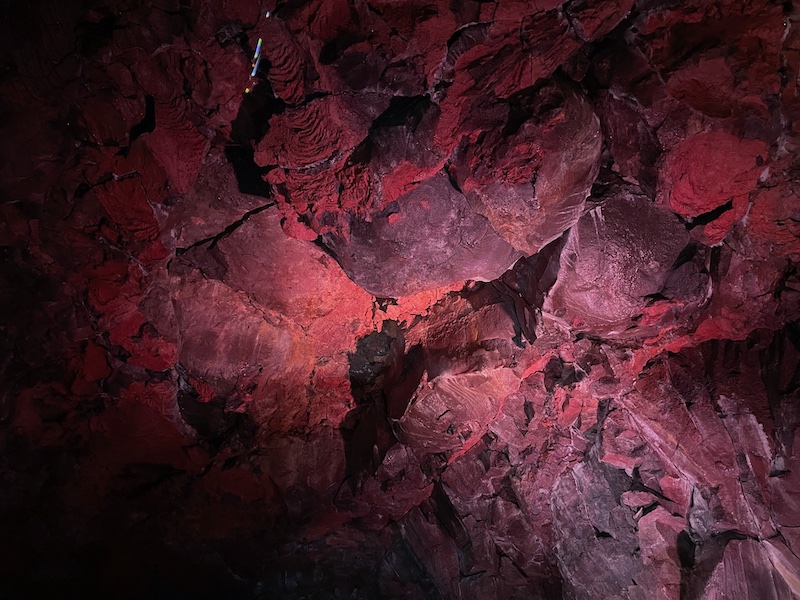
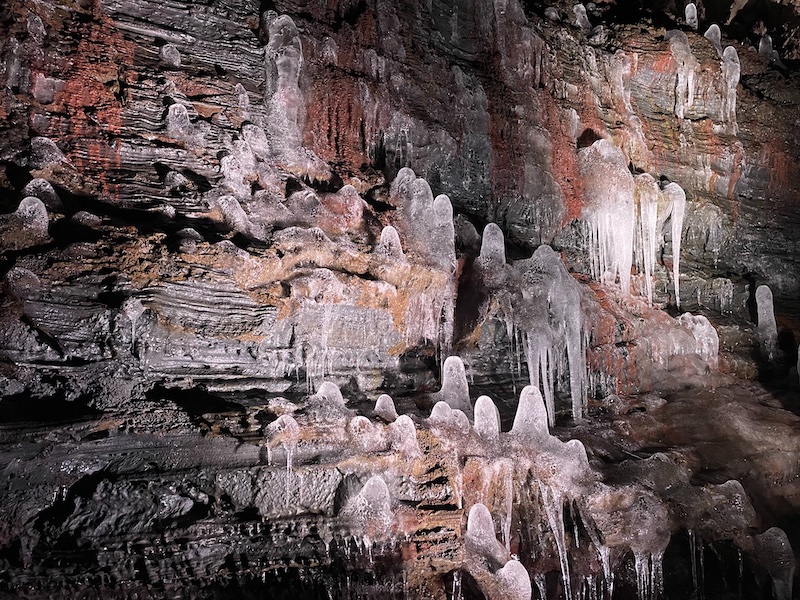
The colors are the first thing you notice once your eyes adjust. Iron in the lava oxidized as it cooled, and long stretches of wall came out in deep reds and oranges. The operator has put electric lights along the walkway, angled to bring the color and the shape of the rock out without turning the place into a nightclub. I am not easily impressed by lighting design, but they got this right.
Then there are the white speckles. Those are bacteria — microorganisms that live on the iron in the rock, in the cold and the dark, with no sunlight and nothing much to eat. NASA has taken samples here, because a cold basalt tube with iron-eating life in it is a reasonable model for what might be sitting inside a lava tube on Mars. Whether or not anything ever turns up on Mars, I like that a cave twenty minutes from my house is on somebody’s shortlist.
The cave is otherwise empty of life. No bats — Iceland has none — and no animals. Nobody lived here, nobody farmed here. It is one of the few Icelandic places with no human story attached to it at all until very recently.
Ice in winter
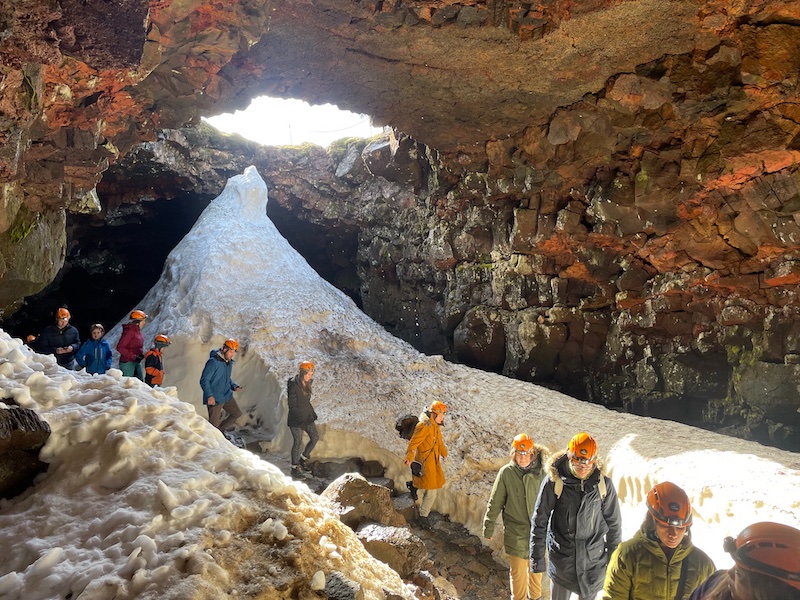
Go between roughly November and April, and there is a second show near the entrance. Water seeps through the rock, drips, and freezes as it lands, building stalagmites of clear ice up from the floor. Icicles come down to meet them. On a cold January day, the first stretch of the tunnel looks like a set that somebody built overnight.
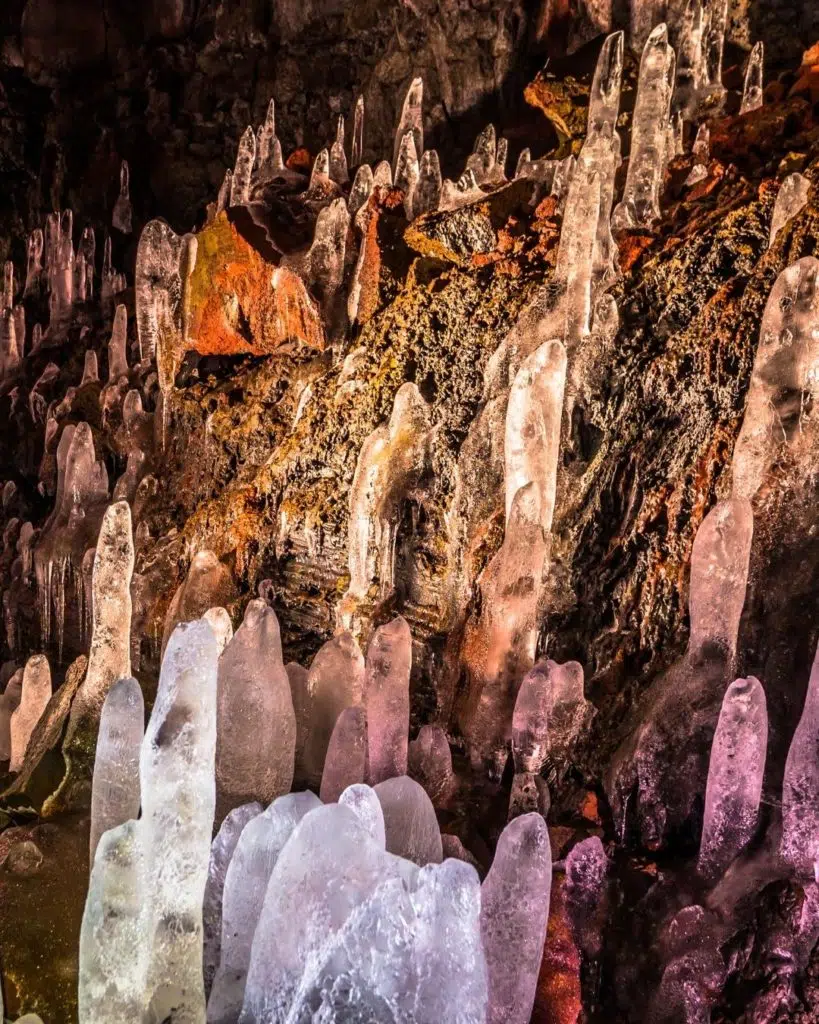
In summer, the ice is gone, and you get more daylight coming through the collapsed sections of roof near the entrance, which is its own thing — three openings, three shafts of light, green moss around the rims. Neither season is the wrong one. They are just different caves.
Which tour to take
You cannot wander in on your own anymore, and that is a good thing — the floor is broken lava, and the roof is not something to test. Everything runs as a guided visit, and there are two decisions to make.
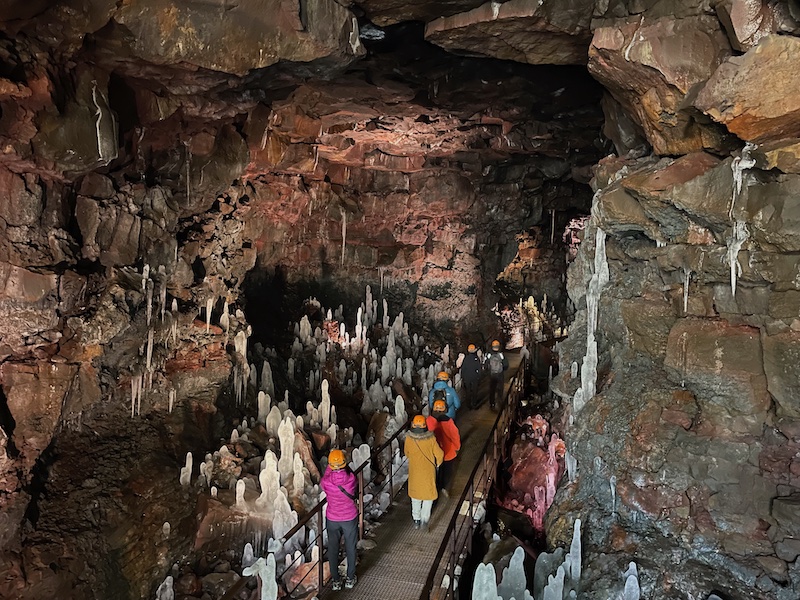
The standard tour is the one most people want. It is about an hour, on the raised steel walkway that runs deep into the main passage, with handrails and steps, at a pace that suits a family. You get the colors, the ice in season, the geology talk and the lighting, and you come out clean. There is also an evening departure in the lighter months, which is quieter, and a version with a bus from Reykjavík if you have not rented a car.
The Lava Falls adventure tour goes past the end of the walkway and on into the parts of the cave with no path, no lights, and no handrails, all the way to the frozen lava falls at the far end. Head torches and a guide, several hours, scrambling over collapsed rock. You want decent fitness and balance for that one. If you have ever been curious about proper caving in Iceland and never had a way in, this is the way in.
Prices and departure times change, so check the current tour list before you plan your day. Book online rather than turning up — this is a small operation and the groups fill.
Readers get money off
The Lava Tunnel gives Stuck in Iceland readers a discount on admission when you book online. The code is not public — it goes out to my newsletter subscribers, along with codes from more than 50 other Icelandic operators. Join the list and you get the lot.
See all the reader discount codes
No spam, and I only work with companies I would send my own family to.
What to wear, and what not to bother with
It is cold in there. Not dangerously cold, but cold enough that a July visitor in a T-shirt will regret it within ten minutes, because the rock never warms up and there is no sun to help you. Bring a warm layer and a rain jacket, because water drips from the ceiling in places.
Wear shoes with grip and a closed toe. The walkway is solid but the steps get wet, and the adventure tour is over loose rock. Helmets and lights come with the tour, so you do not need to buy anything. Leave the good camera bag at home and bring a strap — you will want both hands on the handrail in a couple of spots, and phone cameras handle the low light better than you would think.
If you did not pack for Icelandic weather at all, my guide on how to dress for Iceland covers the rest of the trip too.
Getting there, and what to do with the rest of the day
From Reykjavík you take Route 1 east and turn onto Route 39, the Þrengsli road, towards Þorlákshöfn. The car park is signposted on the left. It is around 40 km and the drive takes 30 to 40 minutes in normal conditions, a little more in winter — the Þrengsli road runs over a small pass and can close in bad weather, so glance at road.is before you set off.
Here is my honest advice about the rest of the day: do not stack anything on top of it. You are on holiday. Sleep in, have a proper breakfast, drive out for a late-morning tour, and then let the afternoon go where it wants. Hveragerði is twenty minutes further east with hot-spring steam coming out of the ground behind the town and good places to eat. The geothermal pools of the south are all within reach. Two good things in a day beat five rushed ones, every time.
If a cave gives you a taste for being inside Iceland rather than on top of it, Into the Glacier — a man-made tunnel in the Langjökull ice cap — is the natural follow-up on another day.
Weddings, film crews and one dropped ring
The cave has had a second life as a venue. Scenes for Noah and the series Sense8 were shot in here, and it has hosted concerts, film nights and weddings — the acoustics in a rock tube 30 meters wide are something else. If you are curious about where else the industry sets up in this country, I keep a running list of Iceland filming locations.
A fair number of people have proposed down there. One man, our guide told us, dropped the ring, and it went straight down a crack in the lava floor where it presumably still sits. He got a yes anyway. I hope they are doing well. If you are planning something similar, keep a firm grip.
Is it worth going?
Yes, and for a specific reason. Iceland gives you an enormous amount of scenery you look at from the outside — waterfalls, glaciers, black beaches. Raufarhólshellir is one of the few places where you get inside the machinery and see how the country was actually built. It takes an hour, it works in any weather, it is close to the city, and it does not require you to be an athlete.
For a family with children who have had enough of sitting in the car, or for a rainy afternoon that has wrecked your plans, it is one of the most reliable things within an hour of Reykjavík.
Lava Tunnel FAQ
What is the Lava Tunnel in Iceland?
The Lava Tunnel is the visitor name for Raufarhólshellir, a 1,360-meter lava tube in southwest Iceland, about 40 km from Reykjavík. It formed roughly 5,200 years ago when lava from the Leitahraun eruption drained out from under its own hardened crust and left an empty pipe of rock behind. A raised walkway and lighting run deep into the main passage, and it is open to visitors on guided tours all year.
How far is the Lava Tunnel from Reykjavík?
Around 40 km, which is a 30 to 40 minute drive. You take Route 1 east out of the city and turn onto Route 39, the Þrengsli road, towards Þorlákshöfn. There is a signposted car park at the cave. A bus tour from Reykjavík is available if you are not driving.
How long does a visit to Raufarhólshellir take?
The standard tour is about an hour underground, so allow two to three hours door to door from Reykjavík with the drive. The longer adventure tour to the far end of the cave takes three to four hours on top of the travel time.
Can you visit the Lava Tunnel without a guide?
No. The cave is fenced and access is through the operator’s guided tours only. That has been the arrangement since the site was developed for visitors, and it is the reason the cave is still in good condition — the floor is broken lava and unlit sections are genuinely hazardous.
Is the Lava Tunnel suitable for children and older visitors?
The standard tour is for anyone who can handle a steel walkway with handrails and a set of steps. It is one of the more family-friendly outdoor attractions near Reykjavík, and there is nothing to climb. The Lava Falls adventure tour is the opposite — loose rock, no path, no lights — and needs reasonable fitness and balance. Check age limits with the operator when you book.
Is it cold inside the cave?
Yes, all year. The rock does not warm up in summer, so bring a warm layer and a rain jacket whatever the month, and wear shoes with grip. Helmets and lights are provided on the tours.
When is the best time to visit — summer or winter?
Both work, for different reasons. From roughly November to April, ice stalagmites and icicles form near the entrance. In summer, you get more daylight coming down through the collapsed roof openings. The cave itself is open year-round, and the weather outside barely matters once you are in.
Is the Lava Tunnel the same as the Inside the Volcano tour?
No, they are two different places and two very different days out. Inside the Volcano lowers you into the empty magma chamber of Þríhnúkagígur on a cable lift, runs in summer only, and costs a great deal more. Raufarhólshellir is a horizontal lava tube you walk into at ground level, open all year, and a fraction of the price.
Is there a discount code for the Lava Tunnel?
Yes. The Lava Tunnel gives Stuck in Iceland readers a discount on admission when booking online. The code goes out to newsletter subscribers rather than being published on the site, along with codes from more than 50 other Icelandic operators. Sign up here to get them.
What is the white stuff on the cave walls?
Bacteria. They live on the iron in the basalt, in permanent darkness. NASA has collected samples at Raufarhólshellir because lava tubes on Mars would offer similar conditions, which makes this cave a useful stand-in for looking for life somewhere else.
I have visited Raufarhólshellir myself, and the Lava Tunnel is one of my travel partners, which means I earn a commission if you book through my link. It does not change what you pay, and it does not change what I write. I have been doing this since 2012 — here is who I am.
Did you enjoy this article?
Get more Iceland insight — straight from a local who's lived here his entire life
Join 8,000 travellers getting honest Iceland advice and unlock exclusive discount codes from 50+ hand-picked Icelandic operators.- ✔ Instant access to exclusive discount codes
- ✔ Savings on tours, car and camper rentals
- ✔ Tips and inspiration for planning your Iceland trip
No spam. Unsubscribe any time.