

Join 8,000 Iceland Travel Fans & Unlock Exclusive Discounts
Join 8,000 travellers getting Iceland advice straight from a local. Subscribe and unlock exclusive discounts from 50+ hand-picked Icelandic operators.
- ✔ Instant access to exclusive discount codes
- ✔ Savings on tours, car and camper rentals
- ✔ Tips and inspiration for planning your Iceland trip
Iceland is probably the most musical country on earth, relative to its size. A nation of just under four hundred thousand people has given the world Björk, Sigur Rós, Of Monsters and Men, Laufey, Hildur Guðnadóttir — and that list barely scratches the surface. Per capita, Iceland produces more internationally recognized musicians than almost anywhere else. Nobody has a fully satisfying explanation for why, but the fact is undeniable.
I’ve lived in Reykjavík my entire life and have spent the past thirteen years interviewing Icelandic musicians for this magazine — not just the famous ones, but the artists who make the scene what it is from the inside. What follows is my attempt to map that scene for visitors: the artists worth knowing before you arrive, the festivals worth planning a trip around, the venues worth finding, and the context that makes all of it make sense.
This is not a complete list — no complete list of Icelandic music exists, because the scene is too active and too constantly producing new things. It is an honest introduction from someone who has been paying close attention for a long time.
Book a hotel and a flight to Iceland
The artists who put Iceland on the global map
Before the current wave of internationally recognized Icelandic musicians, a handful of artists rewired what the world expected from a country this small. These are the ones worth knowing as context for everything that followed.
Bubbi Morthens
Any honest guide to Icelandic music has to start here, even though Bubbi Morthens is almost impossible to explain to someone who didn’t grow up in Iceland. He is the country’s biggest and most enduring rock star — a singer-songwriter who has been writing about Icelandic life, working people, love, loss, and the particular texture of existence in this country since the late 1970s. In 1979, he released his first album ‘Ísbjarnarblús’, which rocked Icelandic society with its candid description of the gritty life of migrant workers who worked in fish factories around the country. A lot of people were shocked, and that was what Bubbi wanted.
Video: Bubbi Morthens performs Stál og hnífur from his first album Ísbjarnarblús
His songs are in Icelandic, which means his international profile is smaller than his domestic stature warrants, but within Iceland, he occupies a position closer to that of a national institution than to that of a musician. Icelanders of every generation know his songs. His concerts sell out. His lyrics get quoted in the same breath as poetry. If Björk represents Iceland’s relationship with the avant-garde and the international, Bubbi represents its relationship with itself — the thing underneath everything else. You will not get far into a conversation with an Icelander about music without his name coming up.

One award among many. One country of 370,000 people.
Björk
There is no way to write about Icelandic music without starting here. Björk Guðmundsdóttir grew up in Reykjavík, began performing as a child, and spent her early career in the Icelandic punk scene before the Sugarcubes brought her to international attention in the late 1980s. Björk was part of the punk rock scene that rocked Iceland in the late seventies and early eighties. It is hard to explain to outsiders the magnitude of the impact that Björk and the scene she was part of had on the staid, grey Icelandic society. A good way to explain Iceland at this time is to call it ‘East Germany’ light. I mean, this is the country that banned beer until 1989.
Music video: Björk’s Human Behavior
Her solo career, which began in 1993, is one of the most sustained and genuinely original bodies of work in contemporary music — avant-garde, emotionally raw, technically ambitious, and entirely herown. She has sold over 15 million albums and remains one of the most influential artists of the past forty years. Björk is probably the single most useful thing you can do to understand why Iceland’s creative culture produces what it produces.
The Sugarcubes
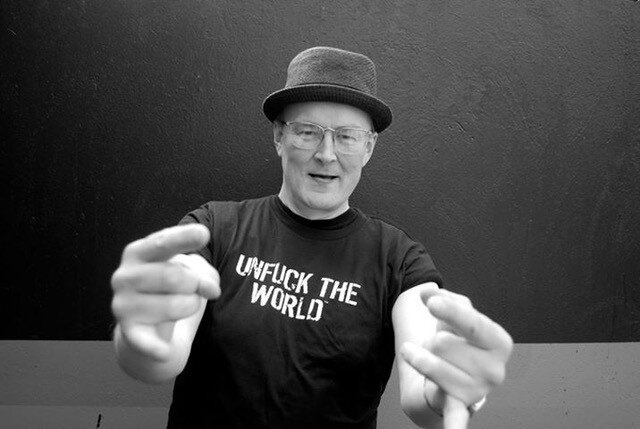
The Sugarcubes were the band that introduced Björk to the world, and they remain one of the most important chapters in Icelandic music history. Formed in Reykjavík in 1986, they played angular, post-punk guitar music, with Björk’s voice sitting atop it like something from an entirely different dimension. They broke up in 1992, freeing Björk for her solo career. Sigtryggur Baldursson, the band’s drummer, gave me one of the best interviews I’ve ever published. Read the interview with Sigtryggur Baldursson.

Sigur Rós
Sigur Rós is Iceland’s other world-changing band. Formed in Reykjavík in 1994, their music is slow, orchestral, and built from sounds that feel geological rather than human — glaciers thawing, lava cooling, aurora light moving across the sky.
Singer Jónsi sometimes performs in Hopelandic, a made-up language with no fixed meaning, which tells you everything you need to know about the band’s philosophy. Their 2001 album ‘( )‘ remains one of the most remarkable things Iceland has ever produced. If you want music that makes the Icelandic landscape feel inevitable, start here. I will always remember seeing Sigur Rós perform at the stunning Ásbyrgi back in 2006. That was just magical.
Video: Sigur Rós performs the songs Hoppípolla & Með blóðnasir at Ásbyrgi in Iceland
Of Monsters and Men
Of Monsters and Men is the most conventionally successful Icelandic band of recent decades in the international pop sense — their 2012 debut single “Little Talks” is one of those songs that appeared everywhere simultaneously and still holds up.
Music Video: Television Love by Of Monsters and Men
The band combines indie folk and pop in a way that is immediately accessible without being shallow, and their connection to Iceland’s landscape and mythology runs through the lyrics if you pay attention. They formed in Reykjavík in 2010 and won the Músiktilraunir competition — Iceland’s annual battle of the bands — which has launched more careers than any other single platform in the country.
Nanna Bryndís Hilmarsdóttir
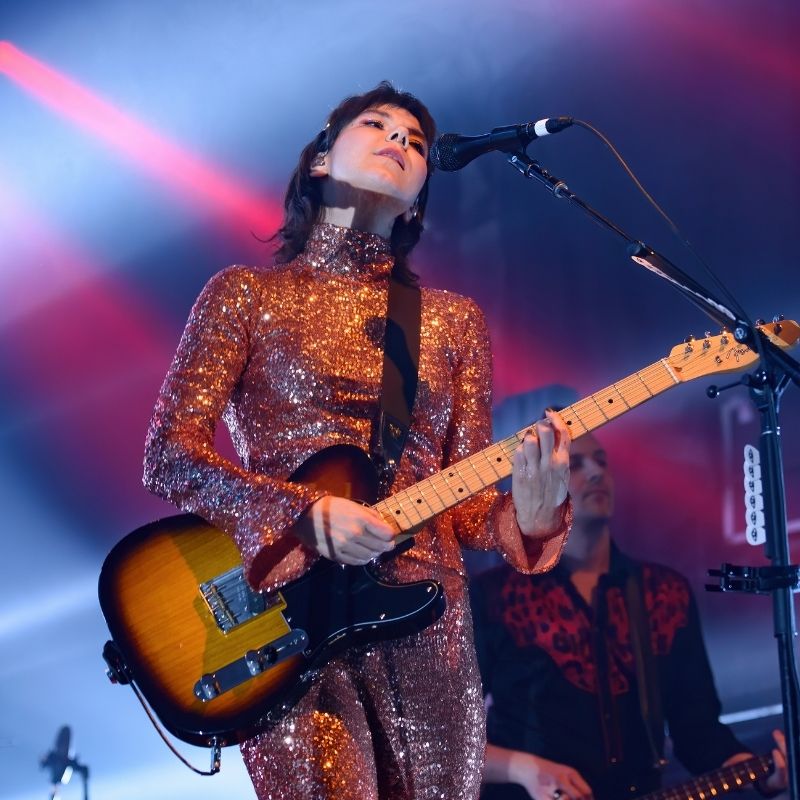
The singer and co-founder of Of Monsters and Men has also built a solo career worth following. Her solo work is quieter and more personal than the band’s output — closer in spirit to the more intimate end of the Icelandic folk tradition. If you come to Iceland having followed Of Monsters and Men and want to go deeper into what drives the voice at the center of that band, her solo recordings are the place to look.
KALEO
KALEO are Iceland’s most successful blues-rock export — a band who sound, improbably, like they grew up in the American South rather than on a volcanic island in the North Atlantic. Their breakthrough came with “Way Down We Go,” which appeared on the TV series Suits and became one of those songs that seemed to be playing everywhere at once.
Music Video: Kaleo perform the classic Icelandic Lullaby Sofðu unga Astin Mín
Formed in the small town of Mosfellsbær just outside Reykjavík, they relocated to the United States after their international breakthrough. The music is rooted in American blues and classic rock, but the vocals are something else entirely.
Páll Óskar
Páll Óskar Hjálmtýsson is one of Iceland’s most beloved entertainers — a pop singer, Eurovision veteran, and cultural institution who has been a fixture of Icelandic public life since the 1990s. He is openly gay and has been throughout his career, at a time when that required real courage, and his visibility has mattered culturally in ways that go well beyond the music. Páll Óskar is one of my personal heroes. A man who has done so much to improve Icelandic society with the message that you can only be yourself.
Video: Páll Óskar performs Sweet Transvestite from Rocky Horror
His pop catalog is unapologetically fun, his stage presence is enormous, and he remains one of those performers who sell out Icelandic venues year after year. Icelanders love him without reservation.
The classical and neoclassical scene
Iceland’s classical and neoclassical music scene is disproportionately accomplished for a country this size — and increasingly recognized internationally. These are the names worth knowing.
Hallveig Rúnarsdóttir
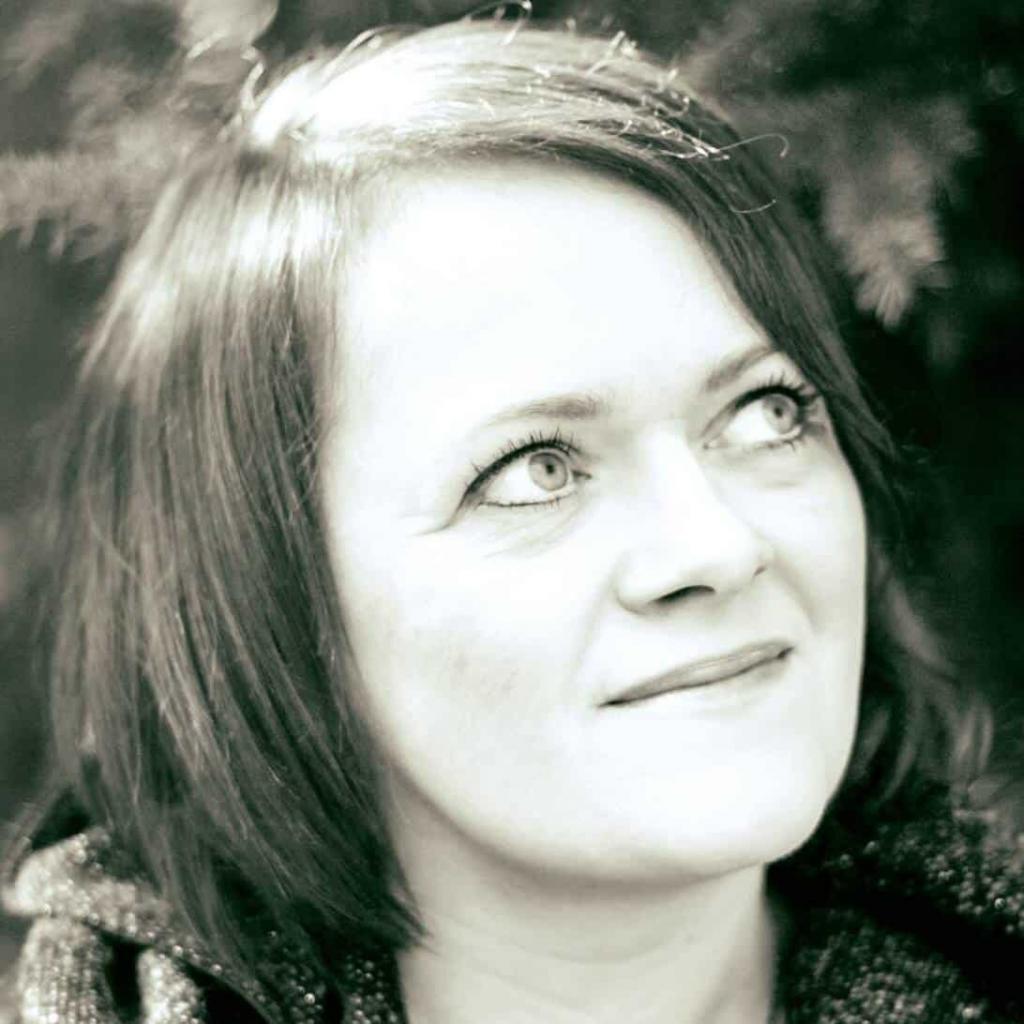
Iceland’s music scene is not only pop and rock. Hallveig Rúnarsdóttir is a classical soprano who has twice won Singer of the Year at the Icelandic Music Awards.
Video: Hallveig Rúnarsdóttir performs Ave María by Icelandic composer Sigvaldi Kaldalóns
She trained at the Guildhall School of Music in London and returned to Iceland, where she has built a remarkable career across opera, lieder, and contemporary classical music. Her 2025 album Songs of Longing and Love, recorded in Copenhagen with Danish pianist Ulrich Stærk, is a beautiful introduction to what Icelandic classical music sounds like when it reaches outward. Read about the album. Full disclosure: Hallveig is my wife, so I am not an unbiased observer — but the two Icelandic Music Awards are objective facts.
Jóhann Jóhannsson
Jóhann Jóhannsson was one of the most important composers Iceland has produced — a neoclassical and electronic musician whose film scores brought him international recognition before his death in 2018 at the age of forty-eight. He scored Denis Villeneuve’s Arrival and Sicario, and James Marsh’s The Theory of Everything, for which he won a Golden Globe. His work moved between album-length compositions, collaborative projects with other musicians, and film scoring with a fluency that very few composers manage. His albums IBM 1401, A User’s Manual, and The Miners’ Hymns are as good a place as any to understand what Icelandic neoclassical music sounds and feels like at its most ambitious. He is missed.
Hildur Guðnadóttir
Hildur Guðnadóttir is an Icelandic cellist and composer who has become one of the most sought-after film and television composers working today. She won the Academy Award for Best Original Score for the 2019 film Joker and won an Emmy and a BAFTA for her score to HBO’s Chernobyl. She grew up in Reykjavík in a musical family — her mother is a flutist and her father a composer — and studied in Berlin before building a career that now spans experimental performance, neoclassical recording, and Hollywood. Her work is dark, textured, and structurally sophisticated in a way that rewards close listening.

producer, and one of the architects of what
modern Icelandic music sounds like.
Ólafur Arnalds
Ólafur Arnalds occupies a space between neoclassical composition, electronic music, and ambient sound design that he has essentially made his own. A BAFTA-winning composer, he has scored numerous film and television productions while also releasing a string of albums that are some of the most genuinely beautiful things to come out of Iceland in the past decade. His 2018 album Re:member, which used custom-built software to create self-playing pianos, is a remarkable piece of work. He is also an important figure in the Reykjavík music community — collaborative, prolific, and consistently generous with other artists. I must mention that back in 2015, I lost to him at the Icelandic Web Awards for the best individual. I remember thinking at the time, there is no way I could compete against that guy!
Víkingur Ólafsson
Víkingur Ólafsson is a classical pianist who has reached the highest levels of the international classical music world — concert halls in New York, London, Paris, Berlin — while remaining based in Iceland.
His recordings for Deutsche Grammophon, particularly his albums of Bach and Debussy, have been received as genuine contributions to the recorded classical repertoire rather than merely competent performances. He is one of those rare artists who makes you think differently about music you thought you already understood.
The electronic and experimental scene
Iceland’s electronic music scene is older, stranger, and more varied than most visitors expect.
Music video: GusGus Higher, ft. Vök
GusGus
GusGus have been making electronic and techno-inflected music since 1995 — an extraordinary run for any band, let alone one from a country of 370,000 people. They started as a collective of musicians, filmmakers, and visual artists, and their sound has evolved across three decades from trip-hop and electronica to a harder, more club-focused techno. They remain genuinely respected within the European electronic music world and continue to release and perform. If you are in Reykjavík when they are playing, go.
múm
múm are one of Iceland’s most quietly influential bands — an experimental group whose music sits somewhere between folktronica, ambient, and chamber music. Formed in Reykjavík in 1997, they have released a series of albums that use found sounds, children’s instruments, and digital processing to create something recognizably Icelandic in its restraint and relationship to landscape. Their influence on the generation of Icelandic electronic and experimental musicians that followed them is significant.
Apparat Organ Quartet
Apparat Organ Quartet is one of the more singular live experiences Iceland’s music scene has produced. Four keyboard players and a drummer, performing on vintage organs with an intensity that lands somewhere between krautrock, minimalism, and a kind of organized chaos. Their live shows are physically loud and relentlessly propulsive in a way that recordings only partially capture. They have been part of the Reykjavík scene since the early 2000s and remain one of those acts that Icelanders point to with particular pride — not because they are internationally famous, but because they are genuinely excellent and entirely their own thing.

Hatari
Hatari are an industrial techno and performance art group who represented Iceland in the Eurovision Song Contest in 2019 — and caused an international incident by displaying Palestinian flags during the televised results show, in direct defiance of Eurovision’s apolitical rules.
Their music is severe, confrontational, and deliberately uncomfortable. Their stage shows involve leather, bondage aesthetics, and political provocation. They are genuinely interesting in a way that very few acts in any genre manage to be, and their willingness to use the world’s most-watched music television program as a platform for protest is very Icelandic in its directness.</p>
Hatari also demonstrates how incredibly quickly you can start a fad in n Iceland. When they won the Icelandic competition to compete in Eurovision on behalf of Iceland. All of a sudden, all companies had BDSM themed ads, the police posted BDSM-themed social media messages, and people posted pictures of their children and grandchildren in BDSM gear, fawning over how cute they looked. While I
- don’t want to kink shame anyone
- have nothing against people doing whatever they like as long as it makes them happy and doesn’t harm anybody else.
- enjoy Hatari’s music and performances tremendously
- am no prude
The whole thing was very awkward to say the least!

his own thing. Eurovision gave him a platform.
He knew exactly what to do with it.
Daði Freyr
Daði Freyr Pétursson became internationally known through Eurovision — his 2021 entry “10 Years” was widely regarded as one of the best songs the contest had seen in years, and his performance, complete with a deliberately awkward matching-outfit choreography that turned out to be brilliantly charming, won him a devoted following across Europe. His electronic pop is warm, funny, and self-aware in a way that is surprisingly rare. He is also, by all accounts, exactly as pleasant in person as he seems on stage.
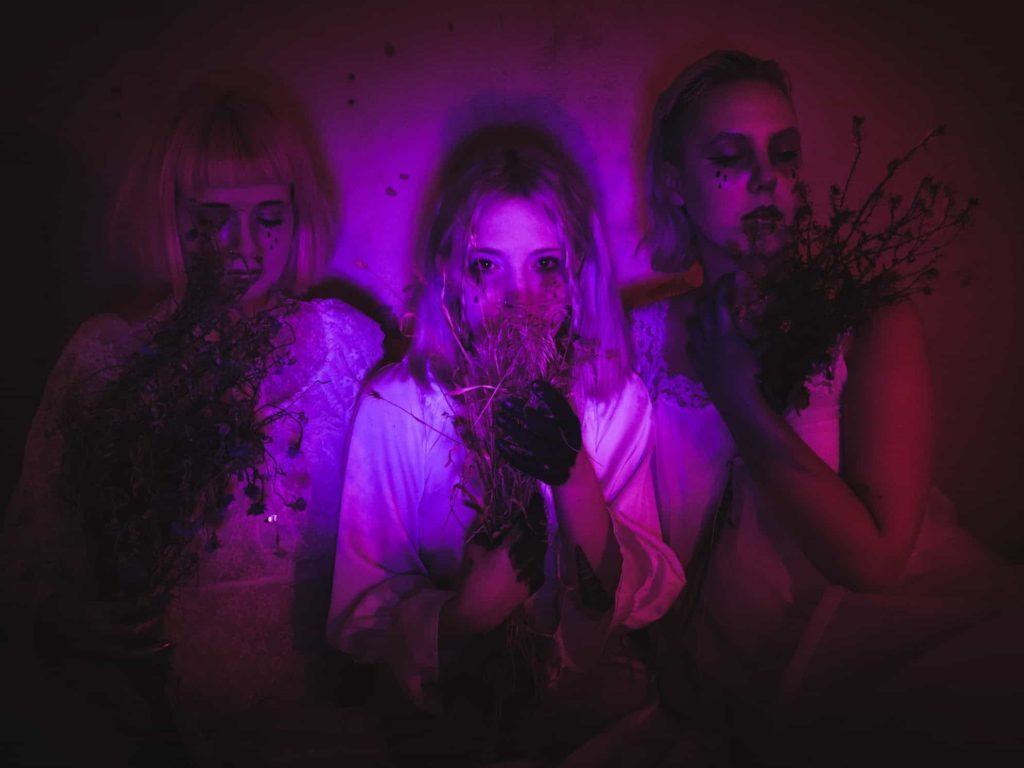
Kælan Mikla
Kælan Mikla, Iceland’s most prominent goth and darkwave act, has been building an international following since 2013. The trio — Laufey Soffía, Margrét Rósa, and Sólveig Matthildur — make music that is cold, atmospheric, and intense, and their stage presence is a full performance in itself. They have toured internationally and collaborated with artists across the European darkwave scene. Their interview on this site is one of the most entertaining I’ve published — their travel recommendations are not what you’d expect from three people who perform in black. Read the interview with Kælan Mikla.
The current generation

the world caught up. It didn’t take long.
Laufey
Laufey Lin Jónsdóttir grew up between two worlds — an Icelandic father, a Chinese mother, a childhood divided between Reykjavík and the United States, classical training at Berklee College of Music in Boston, and a musical sensibility that somehow absorbed all of it without sounding like any of it in particular. She returned to Reykjavík before her career took off, and it was here that I sat down with her for an interview before most of the world had heard her name. What struck me then was how clearly she already knew what she was doing — the jazz influences, the chamber pop arrangements, the decision to write songs that sounded like they belonged to a different era without being nostalgic. She knew exactly what she was making.
The world caught up quickly. Her breakthrough came through a combination of social media presence and music that was genuinely, uncomplicatedly beautiful — a rare combination. Her 2023 album Bewitched reached audiences that jazz-influenced music rarely touches, and at the 2024 Grammy Awards she won Best Traditional Pop Vocal Album, becoming one of the youngest artists ever to win in that category. She now has tens of millions of monthly listeners on Spotify. She is, by any measure, Iceland’s most successful musical export of her generation.
Music Video: Laufey – From the Start
What is worth saying, because it tends to get lost in the international coverage, is that she is genuinely Icelandic — not just by passport but in the way she thinks about music, about restraint, about not overstating things. That quality is everywhere in Icelandic creative culture and it is all over her music if you listen for it. We interviewed her before the fame. The interview holds up. Read the interview with Laufey.
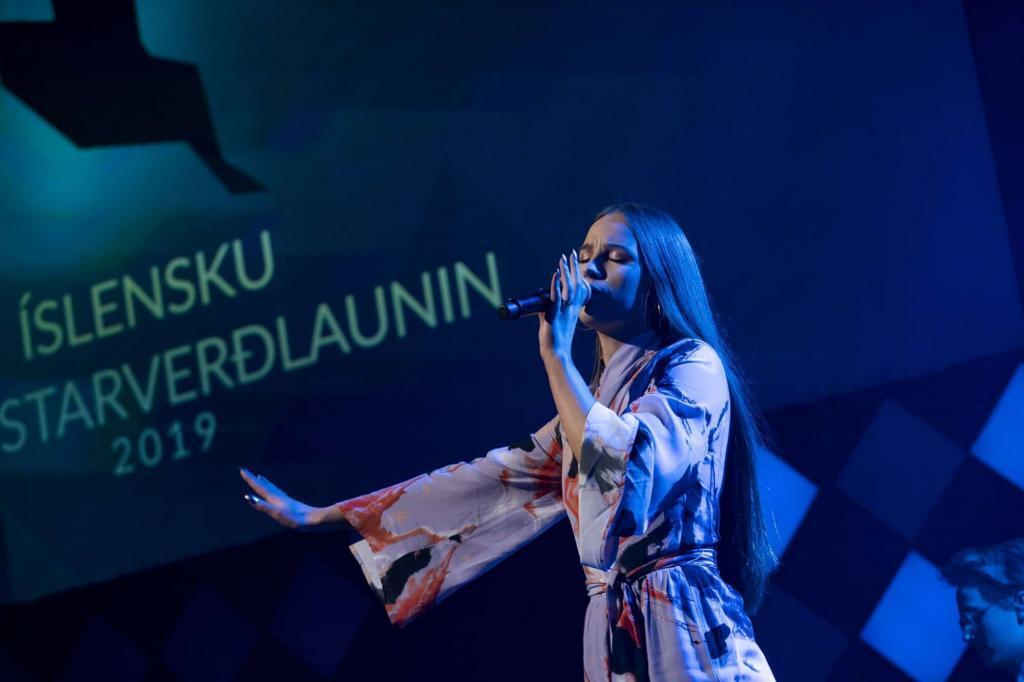
GDRN
GDRN — Guðrún Ýr Eyfjörð Jóhannesdóttir, who wisely simplified things, is one of Iceland’s most compelling younger pop artists. She won multiple awards at the 2019 Icelandic Music Awards, including video of the year for “Lætur mig.” Her music is dreamy and melancholic, produced with a precision that makes it feel both intimate and spacious. She is the kind of artist who has been well known in Iceland for years and will, at some point, become considerably better known internationally.
Read the interview with GDRN.
Keath Ósk — Yaelokre
Keath Ósk is one of the more unusual artists to have emerged from Iceland in recent years — Filipino-Icelandic, raised in Akureyri, and operating under the project name Yaelokre, which is unlike almost anything else in contemporary folk music. Their work is storytelling as much as it is music: a self-contained fictional world called Meadowlark, populated by four masked characters called The Lark, each voiced by Keath, each with their own lore and backstory. The illustrations, the songs, and the narratives are all created by the same person. Their 2024 single “Harpy Hare” went viral on TikTok and YouTube, topping Spotify’s Global Viral Songs Chart for nine days, and introduced an international audience to a project that had been quietly building from a small town in North Iceland.
Lyrics video: Harpy Hare by Yaelokre
Keath completed a world tour across Europe and the United States in late 2025. They are a good example of something Iceland produces with some regularity — an artist who grows up absorbing the folklore, the landscape, and the particular quietness of life here, and turns it into something that travels.
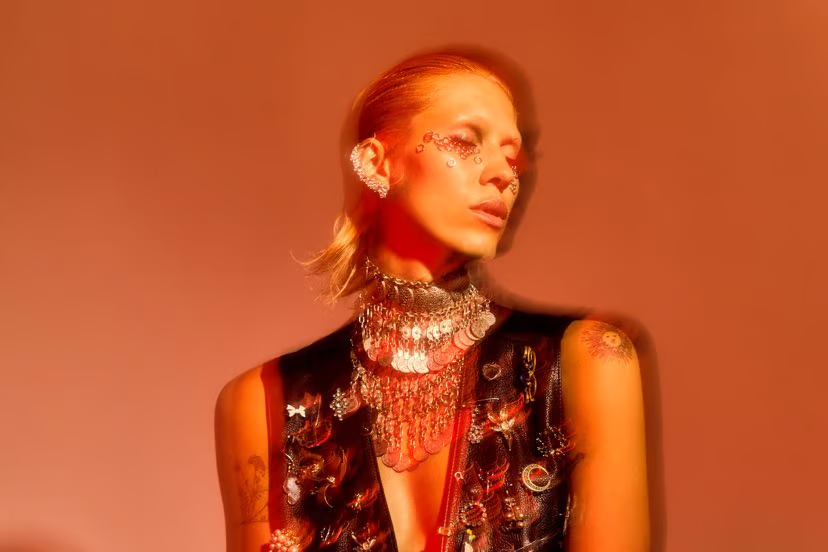
Bríet
Self-produced, deeply personal, and with a stage presence that makes venues feel too small for her. Bríet is Iceland’s biggest domestic pop star of recent years — an artist who writes about her own experience with a directness that Icelandic audiences have responded to strongly.
Read the interview with Bríet
Sóley Stefánsdóttir
Sóley Stefánsdóttir makes indie-pop that is delicate without being fragile — piano-led, melodically inventive, and with a quality of quietness that rewards headphone listening.
Video: Sóley performs I’ll drown on KEXP
She is well regarded both within Iceland and among the international audience that closely follows Scandinavian and Nordic music. She has also collaborated extensively with other Icelandic artists, which reflects the interconnected nature of the Reykjavík scene.

Iceland and Italy, and one of the most distinctive voices
The North Atlantic has ever produced.
Emilíana Torrini
Emilíana Torrini has had one of the more unusual careers in Icelandic music — born in Reykjavík to an Icelandic mother and Italian father, she built much of her early career in London before achieving international recognition with “Jungle Drum” in 2008. Her voice is genuinely distinctive — a light, slightly fragile instrument that she uses with considerable precision. She also co-wrote “Gollum’s Song” for Peter Jackson’s The Lord of the Rings: The Two Towers. Her catalog rewards exploration.
Gróa
Two of the more interesting names from the current Reykjavík underground scene. Gróa plays in the punk and indie space, with an energy that connects to Iceland’s long tradition of raw, DIY guitar music.
Video: Gróa performs on KEXP
BSÍ
BSÍ occupies similar territory. Both are worth looking out for if you’re in Reykjavík during Iceland Airwaves or checking the smaller venue listings during your visit — this is exactly the kind of music the festival’s off-venue program was designed to surface.
Music video: BSÍ performs Vesturbæjar Beach
Icelandic metal — a brief note
Iceland has a serious and internationally respected metal scene that most visitors to the country never encounter. This is a shame.

everyone else is standing on. Still standing on it themselves.
Ham
Ham is one of Iceland’s most important and influential bands, and one of the least known outside the country. Active from the late 1980s through the 1990s, they played a ferocious mix of hard rock, metal, and punk, unlike most of what was happening in Iceland at the time, and their influence on the generation of Icelandic rock and metal musicians who followed them is significant. Members of Ham went on to form and contribute to several other important Icelandic acts.
Video: Ham performs the song Brekka on KEXP
They reunited in the 2010s to considerable domestic enthusiasm. If you want to understand the roots of Iceland’s heavy music scene, Ham is the starting point. I am a huge fan!
Warning: Health risks of attending a HAM concert include profuse sweating, a sprained neck, and severe hearing loss.

at Arctic Henge. Viking metal is rooted in the sagas,
performed where the sagas actually happened.
Skálmöld
Skálmöld are one of Iceland’s most distinctive metal acts — a six-piece band from Reykjavík who play Viking metal rooted entirely in Norse mythology and Icelandic saga literature. Their lyrics are in Icelandic and draw directly from the Eddas and the sagas, which gives their music a literary depth that sets them apart from most metal acts anywhere. Each of their albums tells a complete narrative story, structured like a saga.
They have performed with the Icelandic Symphony Orchestra, which is either the most Icelandic thing imaginable or a complete surprise depending on your expectations of a metal band — and the collaboration works, because the orchestral and the epic were always already in their music. If you have any interest in Icelandic history and literature alongside your metal, Skálmöld are essential.
Sólstafir
Sólstafir have been one of Iceland’s most internationally respected metal exports since forming in Reykjavík in 1995. They began as a black metal band and have gradually evolved into something harder to categorize — post-metal, atmospheric rock, doom — while remaining unmistakably Icelandic in their relationship to landscape and darkness. Their music sounds like the interior of Iceland looks: vast, slow-moving, occasionally violent, and deeply melancholic.
Music Video: Sólstafir, Hin Helga Kvöl
Albums like Ótta and Berdreyminn are genuinely serious artistic statements, and they have built a devoted international following among listeners who approach metal as something to sit with rather than something to mosh to. They perform and record entirely in Icelandic, which is a choice that says something important about where their priorities lie. Their music videos are also terrific.
Misþyrming
Misþyrming is Iceland’s most prominent black metal band and one of the more critically respected acts in the European black metal world. Their music is bleak, technically accomplished, and rooted in a tradition of Scandinavian black metal that takes its darkness seriously. They are not for everyone — black metal rarely is — but for listeners who know the genre, they are essential. The name translates roughly as “mistreatment” or “abuse,” which tells you what you’re getting into. I have never seen them live, seeing Misþyrming is definately on my bucket list.
Video: Misþyrming – full set at Beyond The Gates festival
A note on Icelandic hip-hop
Quarashi
Quarashi were Iceland’s first hip-hop act to break internationally — a genuinely unlikely proposition given that Icelandic hip-hop was not something the world was expecting in the early 2000s. Their 2002 single “Stick ‘Em Up” received significant international airplay, and the band toured extensively outside Iceland. They performed in both Icelandic and English, which made them accessible to international audiences without abandoning the domestic audience that had supported them from the beginning. They disbanded in 2005 and have reunited periodically since. Their existence and international breakthrough opened the door for Icelandic hip-hop, which has since developed into a healthy domestic scene — one that largely operates in Icelandic.
Since 2012, I’ve been interviewing Icelandic musicians — not just the internationally famous ones, but the artists who make the scene what it is from the inside. The full archive is the most comprehensive collection of English-language interviews with Icelandic musicians I know of.
Iceland Music Guide: A Local's Introduction to the Scene