

Join 8,000 Iceland Travel Fans & Unlock Exclusive Discounts
Get Iceland advice straight from a local. Subscribe and unlock exclusive discounts from 50+ hand-picked Icelandic operators.
- ✔ Instant access to exclusive discount codes
- ✔ Savings on tours, car, and camper rentals
- ✔ Tips and inspiration for planning your Iceland trip
How many of us get the chance to see a volcanic eruption up close? Well, not many. But we modern-day Icelanders are privileged people. We don’t always appreciate our privilege, but when the eruption in Iceland began on the 19th of March in the Geldingadalur valley, near Fagradalsfjall on the Reykjanes peninsula, we understood it right away. We also grasped the importance of seizing the day and rushed to the scene. So an eruption in Iceland became a folk festival. And perhaps it became more than that; it became a focal point for the entire nation, which found a diversion from the Covid 19 pandemic.
Earthquakes precede the eruption in Iceland
The eruption was preceded by a swarm of earthquakes. The earthquakes originated in the vicinity of the town of Grindavík on the Reykjanes peninsula. The inhabitants of that town bore the brunt of the earthquakes, although the greater Reykjavik area was also pretty shaken. No people were hurt, and there was no significant property damage. There were a lot of speculations about what, if anything, those earthquakes were preceding. The whole of the Reykjanes peninsula is a highly geologically active area, although it has no massive volcanoes such as Eyjafjallajökull, Hekla, Katla, Öræfajökull, or Bárðarbunga.
Awaken from geological slumber
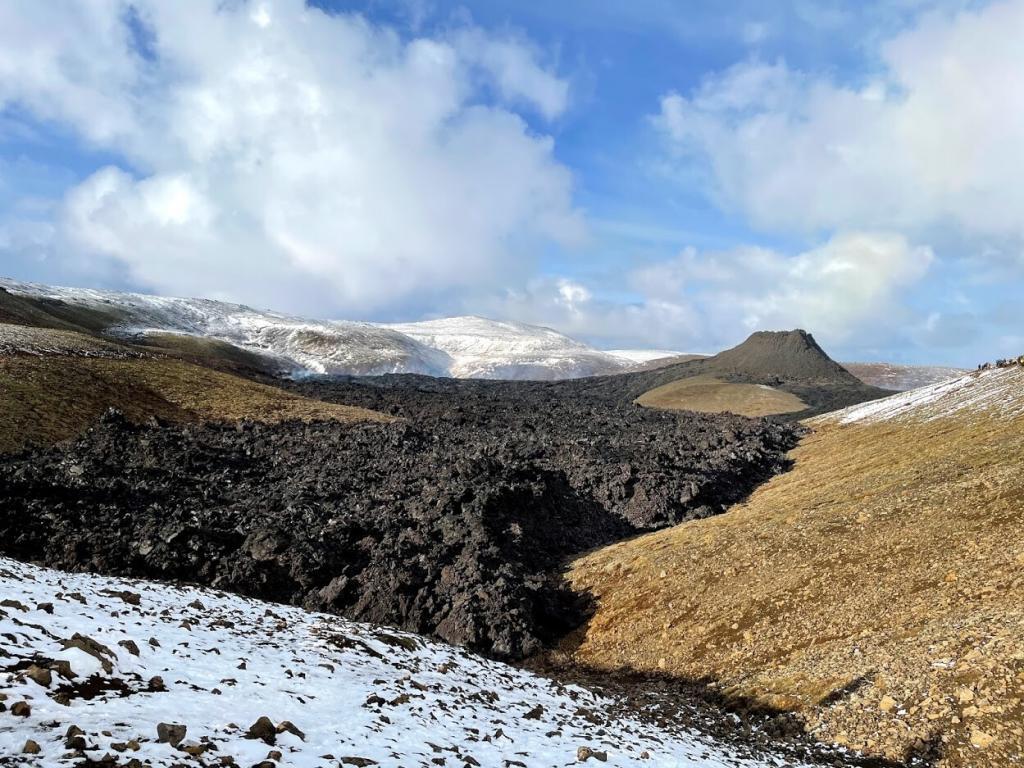
This eruption was the first on the Reykjanes peninsula since the 13th century. There were almost instantaneous reports of people rushing to the scene to witness this natural spectacle. The police, civil defense, and members of the local voluntary Search and Rescue team (SARs) had to scramble to take control of the area. Geologists issued stern warnings about the dangers of toxic fumes condensing in calm weather, especially in depressions close to the flowing lava field. Downwind, you may be subjected to the almost odorless and invisible fumes.
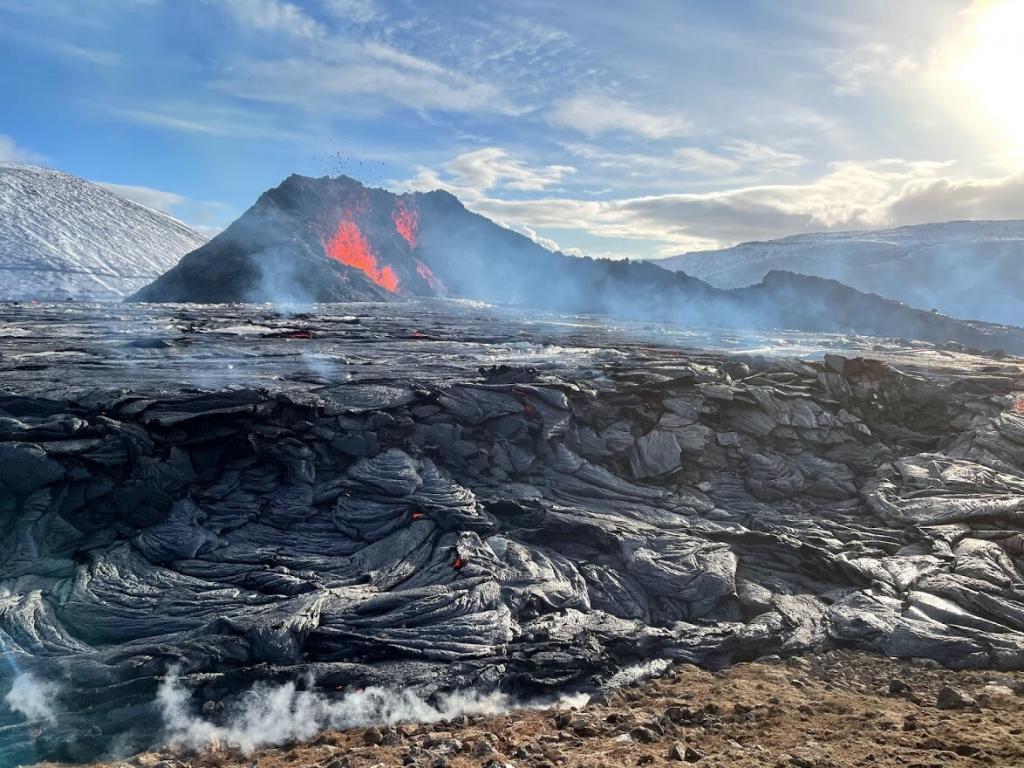
Shenanigans on the fresh lava field
I watched a video of a man wearing no protective gear clambering to recently cooled lava to retrieve his drone that had crashed into it. One misstep and his legs might break through a crevice containing glowing molten rock. Who would risk his or her life to rescue a grievously injured man or retrieve a smoldering corpse from the forming lava field? What kind of person risks his life (or others) for a pricey piece of plastic and aluminum like that? Well, I hope he got a unique drone shot. Still, it must irk him that social media is overflowing with impressive footage from the yet-to-be-named volcano eruption in Iceland. Sadly, the Icelandic National Television (RÚV) did not give me permission to share screenshots of this genius retrieving his drone.
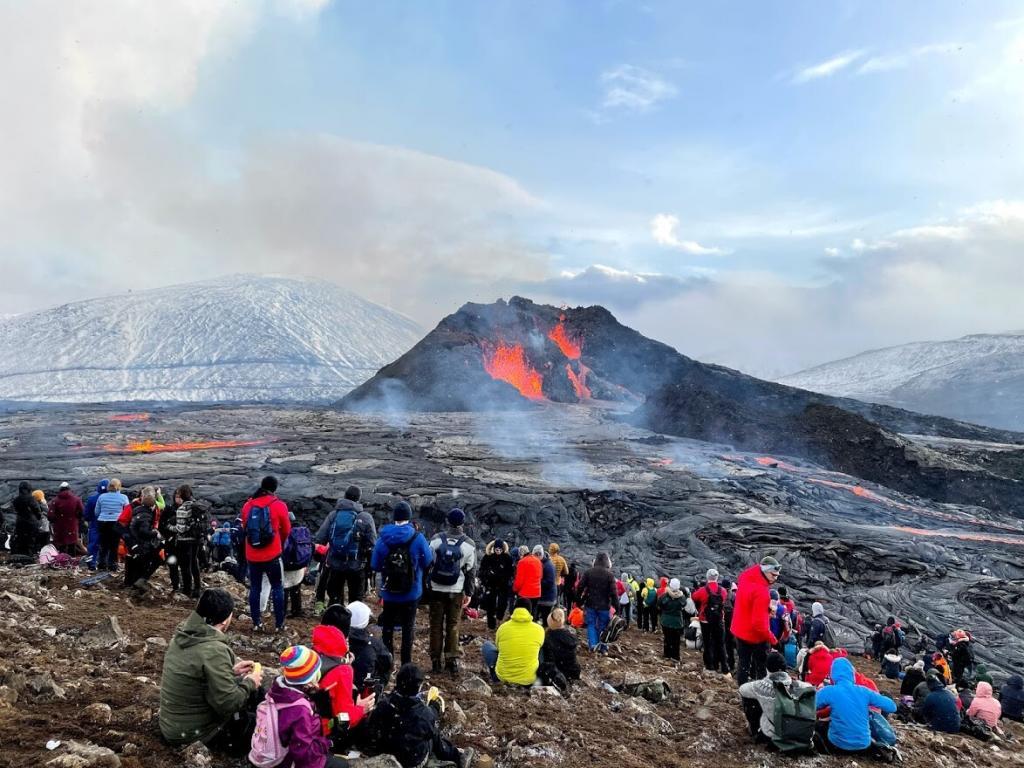
Lava cooking
Somebody was attempting to cook eggs and bacon in a pan on the heat from the lava. The molten lava engulfed the pan before the meal could be enjoyed.
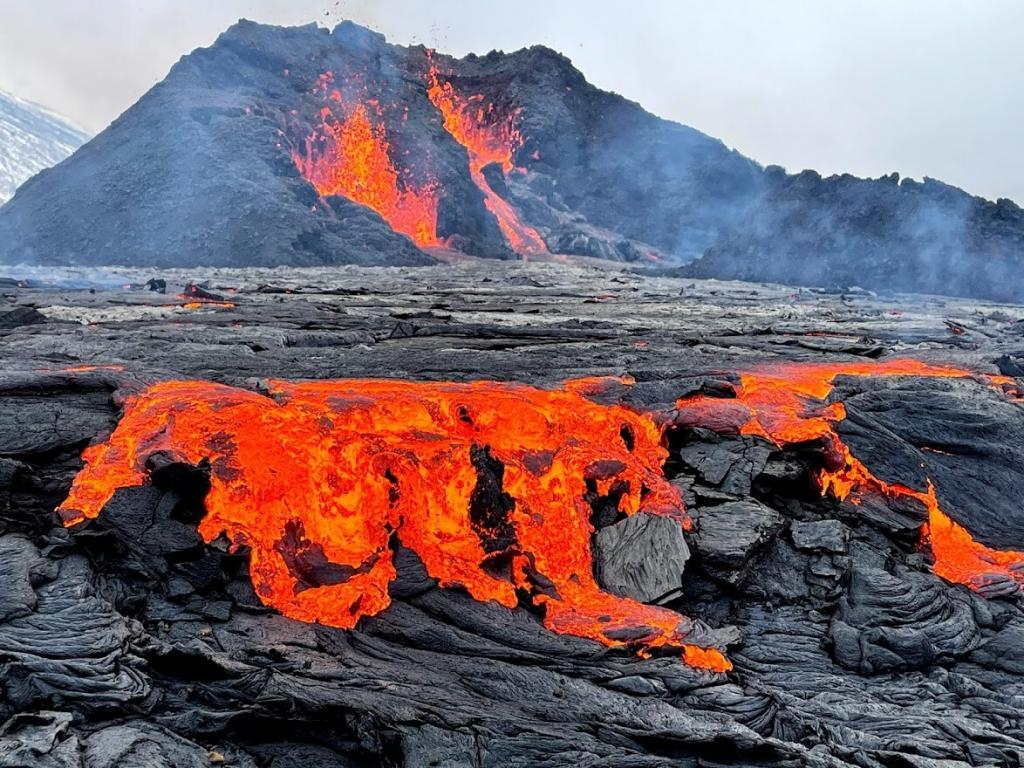
Obvious things not to do in Iceland
Unfortunately, this kind of silliness seems to be ingrained in people when they are out in nature. I suppose getting up on new lava must be added to the things I preach about in my list of dos and don’ts here in Iceland!
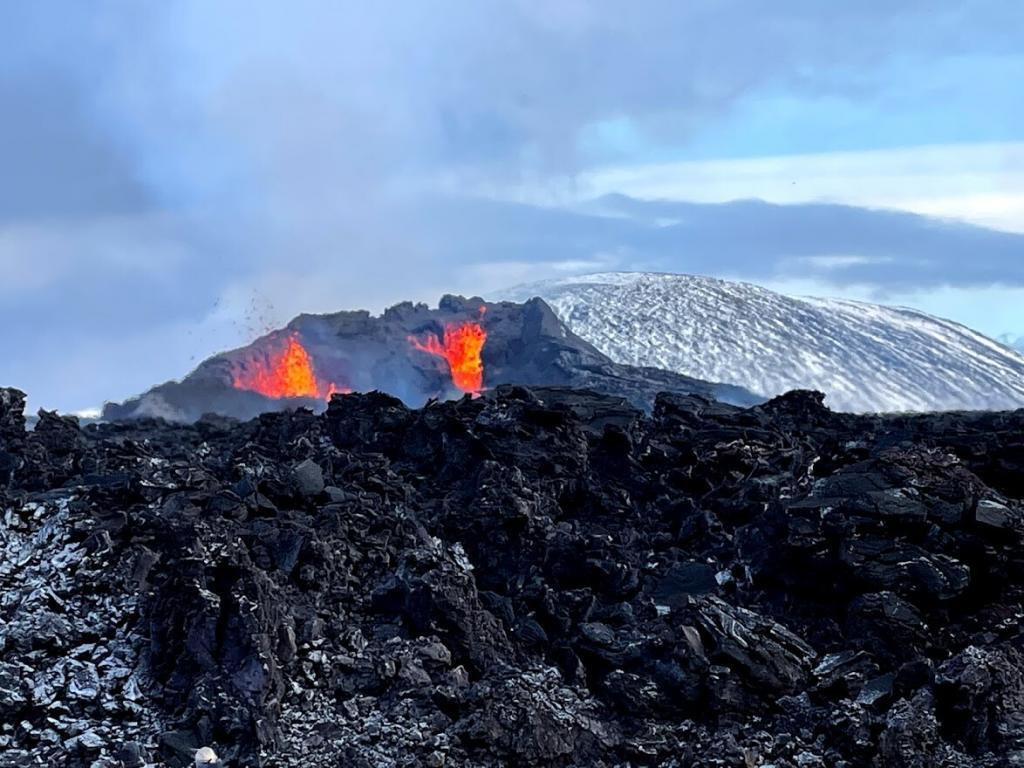
The next volcano trip might be in a helicopter
I just completed my second trip to the eruption in Iceland in three days. Both trips were completely worth it, although I doubt I will hike up there for the third time soon. Many people have been taking helicopter trips to get a better view of the eruption. Seeing this latest eruption in Iceland from the air is tempting, especially if it goes on for a long time.
The caravan of volcano hunters
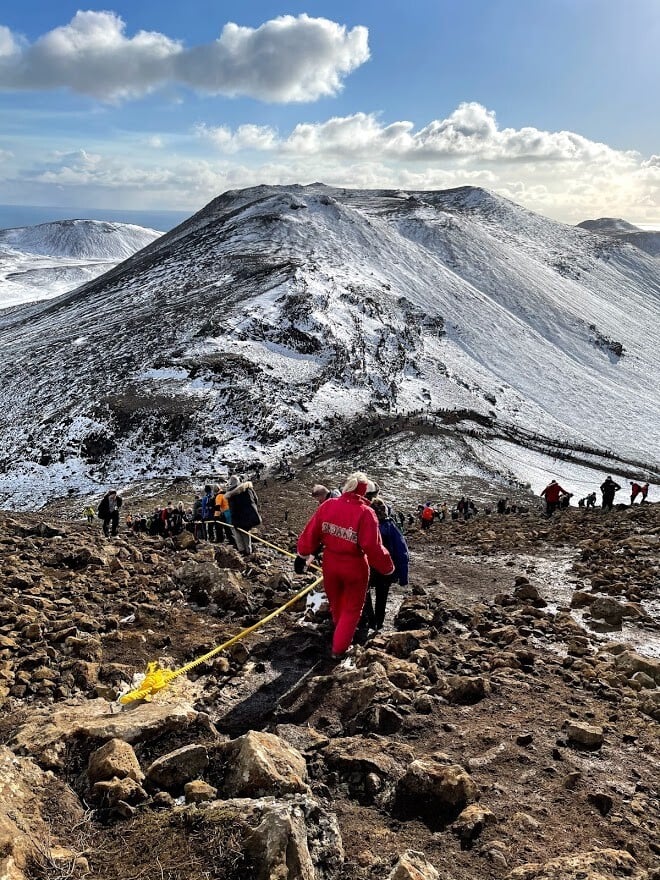
The first trip was last Sunday, when over five thousand people made the approximately 10 – 13 KM (6 – 8 mile long hike) from wherever they could park their cars on the Suðurstrandarvegur road near Grindavík town. The police made sure that only a set number of people could enter the area. All kinds of people in all types of gear embarked to see the volcano. I saw fashionistas in fancy sneakers and stylish jackets going for that perfect selfie, old people with walking poles in worn walking boots, and faded woolen sweaters. Catholic nuns, mountain bikers, and families with children of all ages traveled together. A man came running through the throng, dance music blaring from a speaker he was carrying.
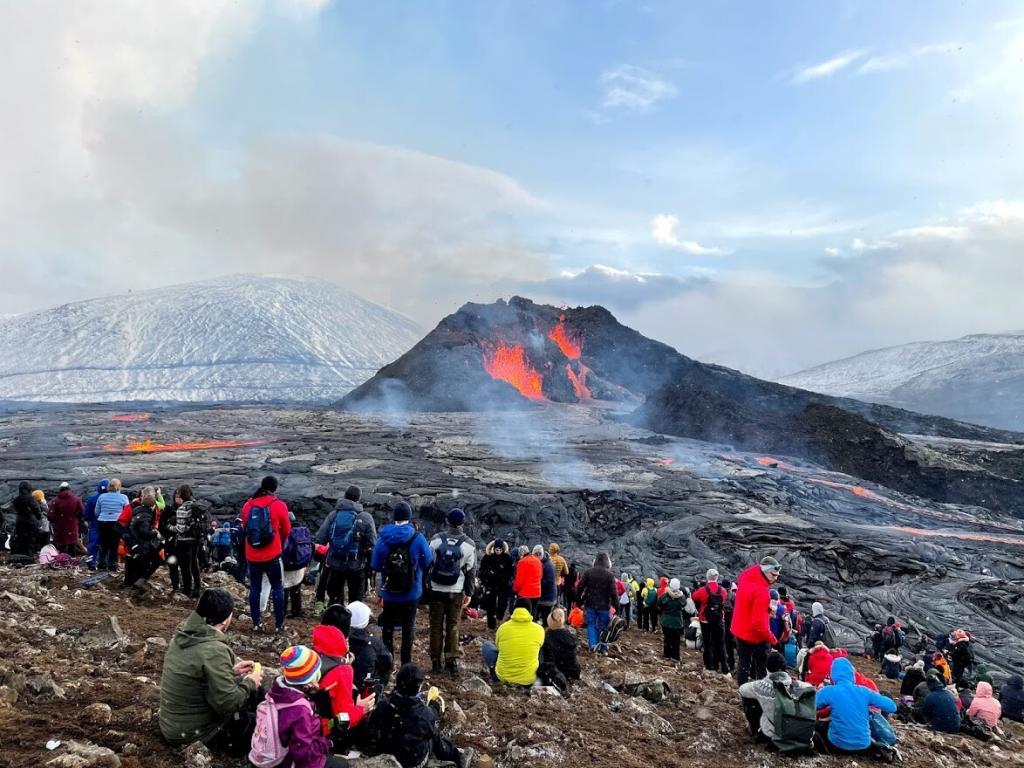
Fun at the devil’s bonfire
On Sunday, there were hundreds, if not thousands, of people around the devil’s bonfire. It was really just a giant fun-festival. At the edge of the lava field, we crowded to take pictures. A young man had taken off his shirt and posed for the camera. Children threw rocks at the lava—the heat pulsed of the lava that was slowly being pushed towards us. The police occasionally warned people to move away from the lava.
Video from the eruption in Iceland: A massive piece of lava comes crashing down
Take your kids to a volcano on a dark and stormy night
On the way back, it had gotten dark, and it was starting to snow. We met a family, an Icelandic couple with two young children, who asked us how far it was up to the volcano. Only one of them, a young girl, had any light. When we were driving back to Reykjavik, we heard that the site of the volcano was now being closed and cleared of people. I remember thinking how glad those kids weren’t being dragged through inclement weather and almost zero visibility for four or five hours. Even if the eruption looks awesome in the dark.
Contemplating volcanic sound waves
Today was different. My daughter and I started off early, and there were a few people on site. The mood was different with few people. Much more reflective and introspective. I was glad to see the eruption on a quiet day. You could sit in peace and look directly at the eruption. Just imagine closing your eyes and contemplating the sound from the erupting craters, which sort of pulses through the heat mist over the lava.
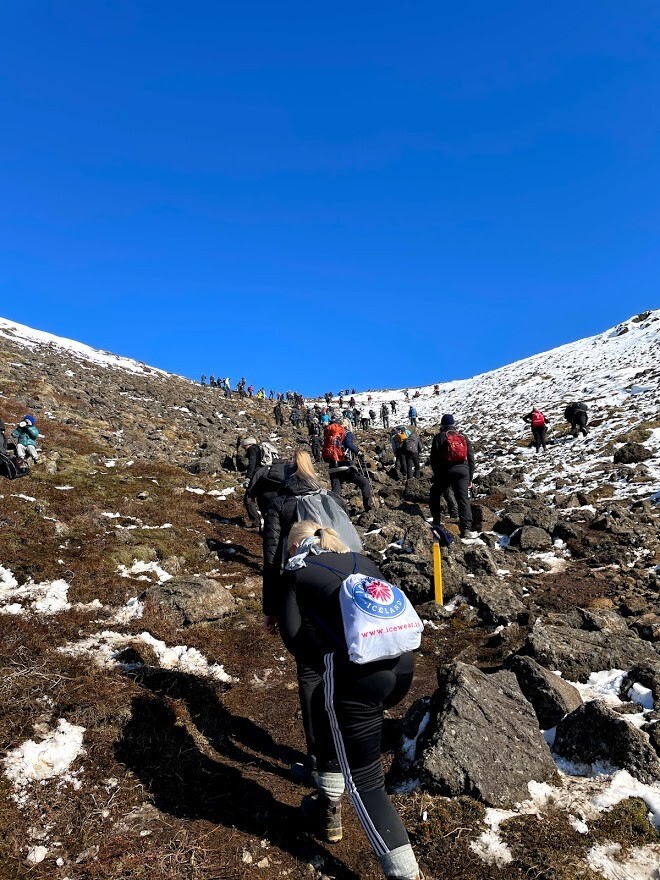
Rescue operation
On my second trip up, I rescued an elderly Asian lady who had basically given up on a snowy, slippery slope. She hung on, terrified, for dear life on all fours. I made my way over to her and led her to the top. I stopped occasionally and basically ordered this terrified woman to breathe and relax. She started to relax a little before we reached the top, but she was physically, and especially mentally, exhausted. We came across her “fellow” travelers at the top of the slope, taking pictures of us and laughing. I gave them a piece of my mind, and the laughter stopped.
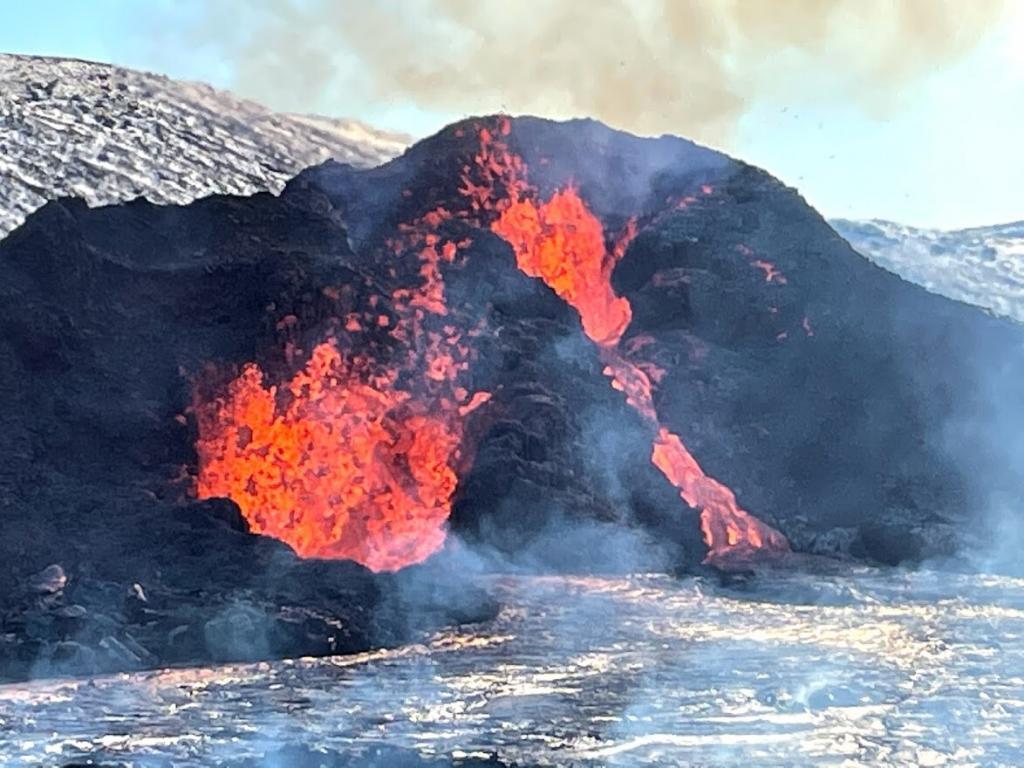
Delightfully hellish scene
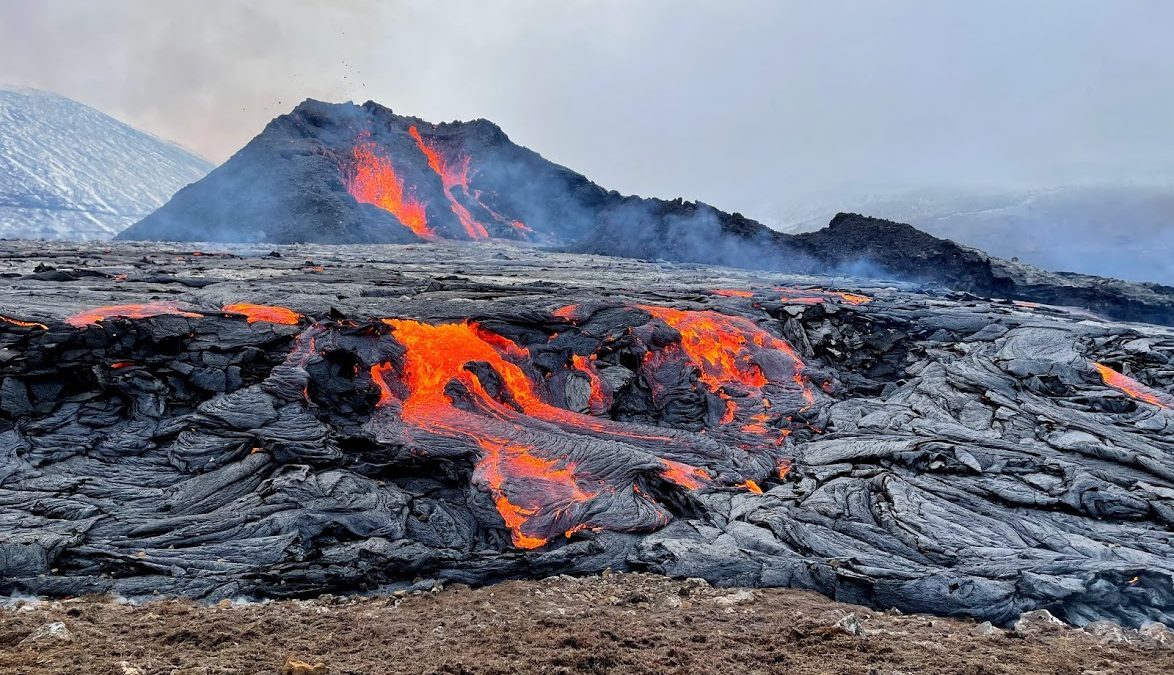
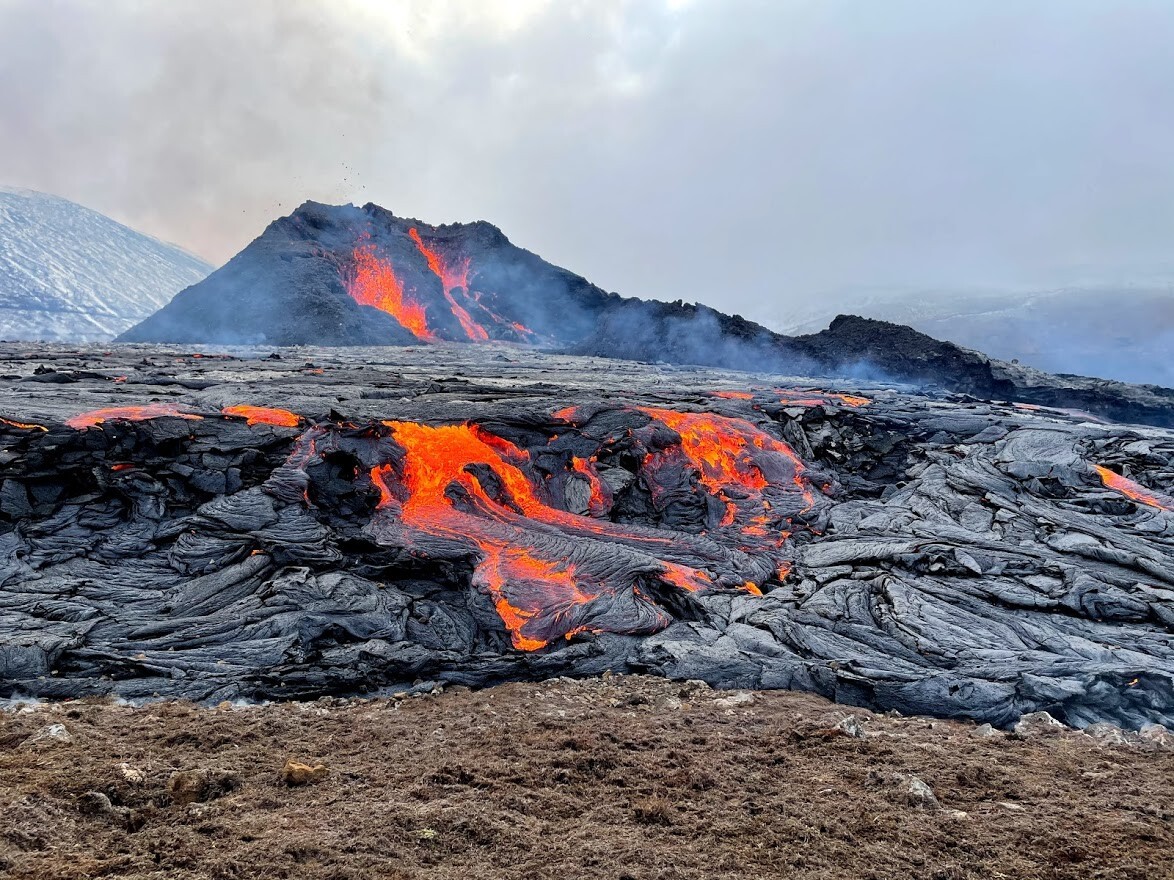
Two days later the eruption has two craters. These craters sit close together, divided by a thick wall of lava. Both craters emit a steady mass of molten lava. The activity has a stable baseline, but often, the intensity of the eruption in the craters increases to a crescendo of tremendous explosions of molten lava. One crate sits inside a cave, and seeing the lava light up its innards and smash against its ceiling is just incredible. A massive river of lava that flows down from the crates slowly and surely adds to the already large lava field. The whole scene is delightfully hellish.
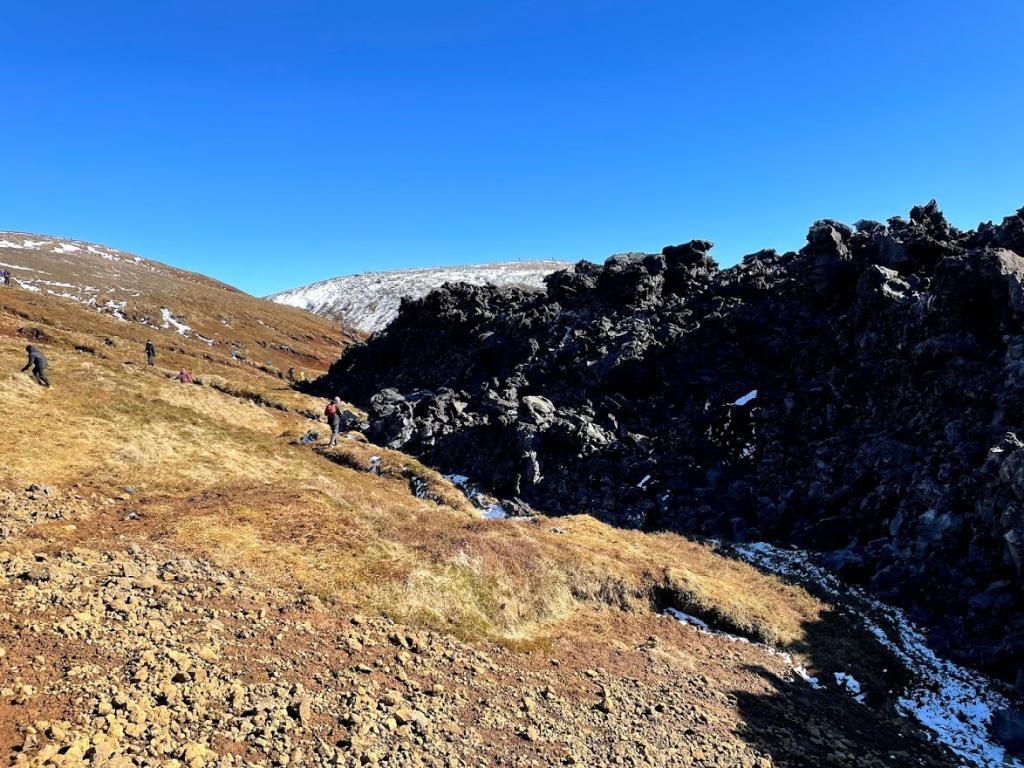
Uncertain future
So what is next for Icelandic eruptions? Nobody knows. The eruption can be a start of a very active phase that could last for a long time. Or it might not. Nobody really knows.
Want to know more about the Reykjanes peninsula?
Read about the geological wonders of the Reykjanes peninsula on Science Direct.
Did you enjoy this article?
Get more Iceland insight — straight from a local who's lived here his entire life
Join 8,000 travellers getting honest Iceland advice and unlock exclusive discount codes from 50+ hand-picked Icelandic operators.- ✔ Instant access to exclusive discount codes
- ✔ Savings on tours, car and camper rentals
- ✔ Tips and inspiration for planning your Iceland trip
No spam. Unsubscribe any time.