
Join 8,000 Iceland Travel Fans & Unlock Exclusive Discounts
Subscribe and instantly receive free discount codes for tours, car rentals, camper vans, and outdoor gear — carefully hand-picked to help you save on your Iceland adventure.
- ✔ Instant access to exclusive discount codes
- ✔ Savings on tours, car and camper rentals
- ✔ Tips and inspiration for planning your Iceland trip
Iceland’s volcanic landscape tells a story of beauty and devastation in equal measure. Iceland’s rugged beauty is shaped by countless eruptions. However, that has come at a price. Throughout Icelandic history, cataclysmic eruptions have devastated the Icelandic people. If you want to immerse yourself in the sheer beauty of Icelandic volcanic landscapes, while also learning about the dramatic history connected with them, the new travel route Volcanic Way is just right for you.
Eight Major volcanic systems are on the Volcanic Way
Árdís Erna Halldórsdóttir, Project Manager at Visit South, has been part of the team developing and promoting the Volcanic Way, an innovative 700-kilometer travel route that weaves through Reykjanes and South Iceland. The route connects eight major volcanic systems—from the recent eruptions at Fagradalsfjall on the Reykjanes Peninsula to the mighty Öræfajökull beneath Vatnajökull glacier—each with its own story of how eruptions have shaped both landscape and community.

Embracing the principles of slow travel
Unlike traditional sightseeing routes that rush travelers from one iconic location to another, the Volcanic Way embraces the principles of slow travel. It invites visitors to linger in smaller towns, support local businesses, and understand both the creative and destructive power of Iceland’s volcanoes. This thoughtful approach has resonated with travelers seeking authentic experiences in Iceland.
Book a hotel and a flight to Iceland
What makes the Volcanic Way particularly meaningful is its honest acknowledgment of volcanic forces—designed by locals who understand the dual nature of living near active volcanoes.
Throughout Iceland’s history, eruptions have brought serious consequences—the Eldgjá eruption around 939-940 CE caused widespread famine and climate disruption across the Northern Hemisphere, while the violent 1362 eruption of Öræfajökull destroyed the wealthy district of Litlahérað. Perhaps most devastating was the Lakagígar eruption from June 1783 to February 178. This created the disastrous Móðuharðindin (mist hardships). The relationship between Icelanders and their volcanoes has been one of resilience and adaptation. After all that has happened, we Icelanders are still here! I would venture on the Volcanic Way with this history in mind.

Hey Árdís, thank you for taking the time for this interview. Can you tell me about your background and what brought you to work in the travel industry?
Thank you for having me in your publication, Jón! I was born and raised in the cute little fishing town of Höfn, surrounded by the majestic Vatnajökull Glacier and the North Atlantic Ocean. I had the privilege of both travelling a lot and living abroad as a child, which I loved, and at the same time, it was a total mystery to me that people would actually spend their free time and money to visit Iceland of all places! It´s kind of crazy to say, but when growing up with the Glacier lagoon and Skaftafell in your close vicinity is your normal, it just takes a while to fully understand its uniqueness.
I was probably in my early twenties when I realized how amazing Iceland is and all the potential it had in tourism. It was there and then that I decided to pursue my Bachelor’s and Master’s in the field, along with my anthropology degree.

What inspired the creation of the Volcanic Way?
South Iceland already offers one of the most visited travel routes in the country: The Golden Circle, which is amazing. Nevertheless, it leaves out so many extraordinary places in the south that are worth visiting. We wanted to create a travel route that would represent the whole area, and what better than the volcanoes that bind us together from east to west!
The Volcanic Way is described as a “slow travel” alternative to more traditional routes. Can you explain this philosophy and how it benefits both travelers and local communities along the way?
What is so special about The Volcanic Way is that it was designed by locals who wanted to show how communities live in harmony with the landscape. The well‑marked, approachable stages of the travel route are meant to help travelers learn independently while experiencing the country’s dynamic geology firsthand. The inspiration included promoting sustainability, balancing tourism with local well‑being, and encouraging visitors to explore both famous and lesser‑known areas at a slower pace.

Reykjadalur — the Steam Valley — near Hveragerði, where a short hike rewards you with a warm geothermal river to bathe in. A perfect slow travel moment along the Volcanic Way. Photo: Þráinn Kolbeinsson.
How has traveler response been since launching the Volcanic Way?
Travellers, both old and young, are very curious about the travel route, and it has proven to bring both a fun and educational structure to their South Iceland visit. There is just so much to see and do as along with all the local towns that each carry their own charm, you´ll be able to experience the elements of hot springs, lava fields, new and old volcanoes, black sand beaches, sub-glacial volcanoes, volcanic islands, basalt columns, and lava beaches.
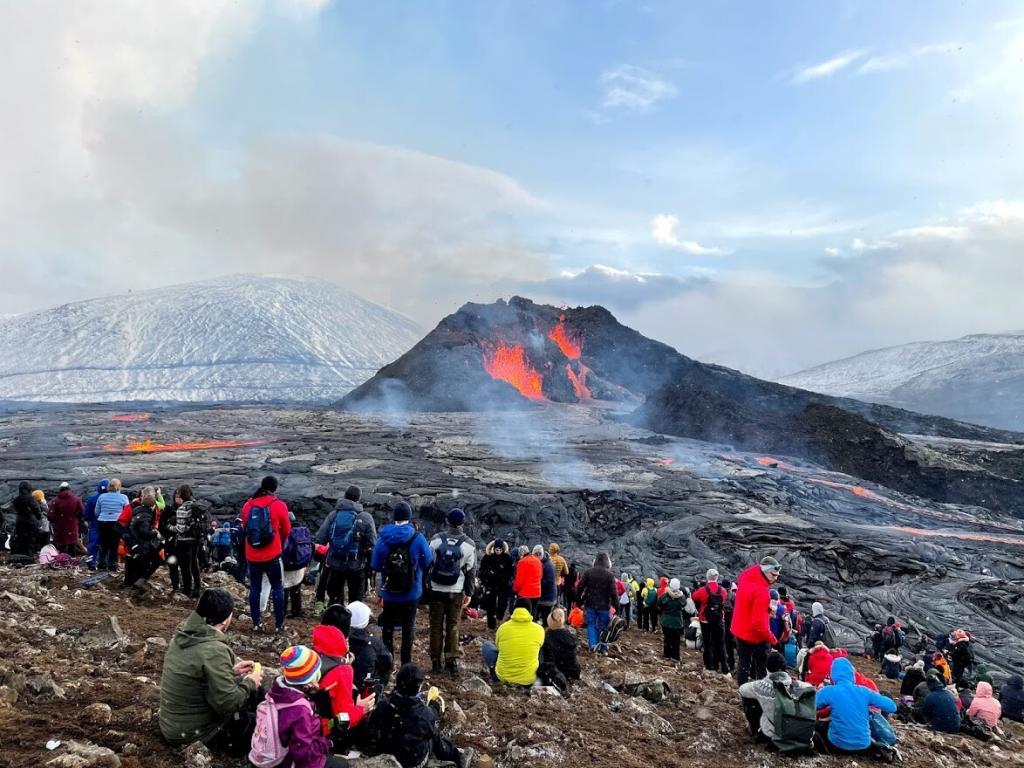
Iceland has experienced several volcanic eruptions recently, particularly on the Reykjanes Peninsula. How has this affected the Volcanic Way?
Yeah, it really is the Volcanic Way, isn´t it! In most cases, travellers are able to follow the original route from Reykjanes via Suðurstrandarvegur to South Iceland. Howeer, the eruptions in Reykjanes in recent years have sometimes caused road closures. This has led travellers to an alternative route from the west. Witnessing an eruption or fresh lava is something else. Whichever route is chosen, it will be a true Icelandic adventure.
The route covers approximately 700 kilometers one-way. What’s your ideal timeframe for experiencing the Volcanic Way, and what are travelers most surprised by when they take their time with it?
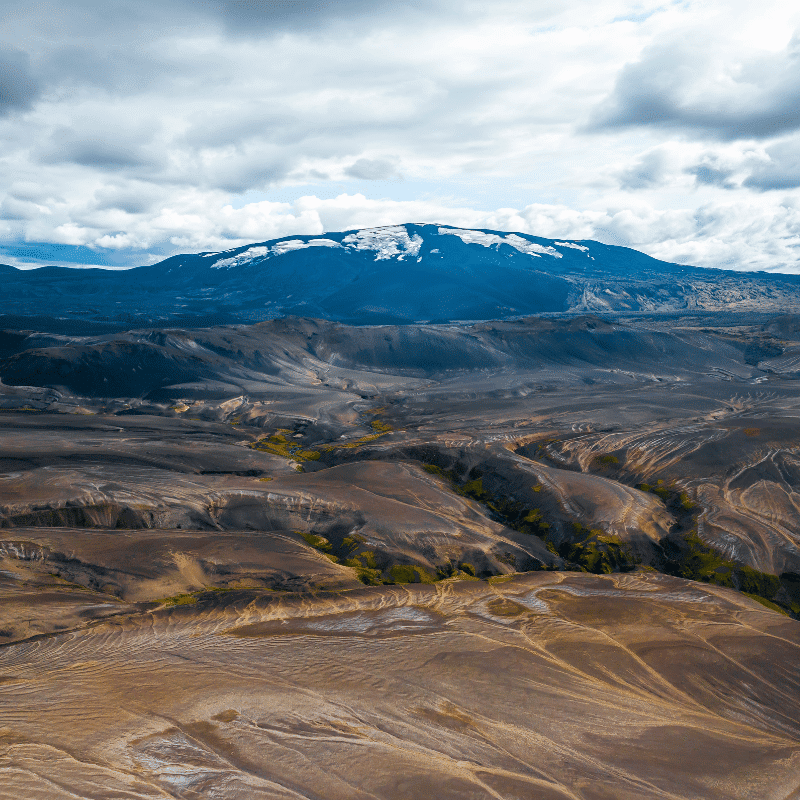
It seems to amaze most people how close you actually get to experience both active and historically significant volcanoes, all while following a safe and accessible travel route. Although Iceland is known as the country of ice and fire, many don´t realize before their visit how closely these elements actually coexist. I mean, how many have seen or travelled on a volcanic mountain that sits beneath a thick ice cap?
I would suggest taking your time to visit the eight stages of the Volcanic Way, at least one day per each stage. More if you can. You have the possibility to visit up to 17 Icelandic towns during your journey. Pick a few and blend in with the locals. Join in the dining and activities they offer. Maybe you´ll make new friends along the way.
For travelers reading Stuck in Iceland who are considering the Volcanic Way, what’s one piece of advice you’d give them to help them get the most meaningful experience from their journey?
My best advice is to slow down and take the time to fully enjoy your journey. Often the pure magic lies in stepping out of the car at random places, whether it is to absorb the dynamic landscapes, hear the birds sing or listen to the quiet. Normally, the most meaningful moments occur when you are not in a rush and give yourself the opportunity to seize the moment.
What are your favorite places and activities in Iceland?
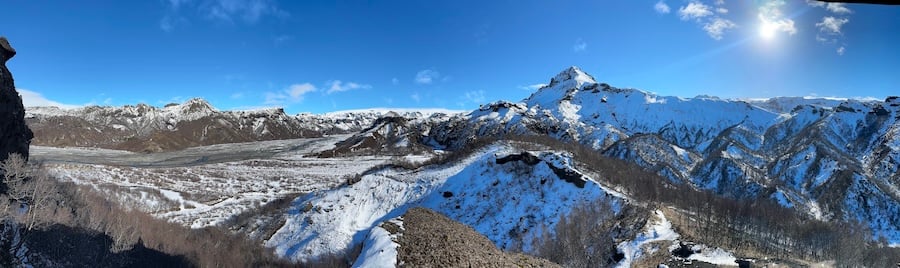
That’s definitely the hardest question to answer! Iceland has so many unique places and experiences to offer. But if I have to choose, I’d start with the incredible variety of hiking opportunities. There’s truly something for everyone—whether you prefer a casual stroll on an accessible lowland trail or a multi‑day adventure in the backcountry, in places like Þórsmörk or Lónsöræfi, or even glacier tours. You’ll find it all along the Volcanic Way. There are also many local companies that know the region inside and out and can guide you to paths less travelled.
As a people person, I also have to mention the charming small towns along the route. Don’t miss the chance to stop by, grab a coffee, enjoy the playgrounds with your kids, or relax in the local swimming pools for a real Icelandic experience.
Key takeaways about the Volcanic Way
It’s more than just a scenic drive — The Volcanic Way connects eight major volcanic systems across stuckiniceland 700 kilometers, running from the recent eruptions at Fagradalsfjall on the Reykjanes Peninsula all the way to Öræfajökull beneath Vatnajökull glacier.
Slow down — that’s the whole point
nlike traditional sightseeing routes, the Volcanic Way embraces slow travel, inviting visitors to linger in smaller towns, support local businesses, and understand both the creative and destructive power of Iceland’s volcanoes.
Budget at least 8 days
Árdís recommends at least one day per stage, with 17 Icelandic towns available to visit along the way. More if you can manage it.
Eruptions are part of the experience — Recent eruptions on the Reykjanes Peninsula have sometimes caused road closures, leading travelers to an alternative western route — but witnessing an eruption or fresh lava is considered a highlight in itself.
Iceland’s volcanic history hits differently here — The Lakagígar eruption of 1783 created the catastrophic Móðuharðindin, and the 1362 Öræfajökull eruption destroyed the wealthy district of Litla Hérað (e. Little Shire) — traveling the route with that history in mind adds real weight to the landscape.
Eight Volcanoes, 17 Towns, One Road: Iceland's Volcanic Way