

Join 8,000 Iceland Travel Fans & Unlock Exclusive Discounts
Subscribe and instantly receive free discount codes for tours, car rentals, camper vans, and outdoor gear — carefully hand-picked to help you save on your Iceland adventure.
- ✔ Instant access to exclusive discount codes
- ✔ Savings on tours, car and camper rentals
- ✔ Tips and inspiration for planning your Iceland trip
The horrible Icelandic Yule lads were a gruesome bunch of trolls that terrorized children and stole food from hungry peasants around Christmas. Their parents were the horrible ogre Grýla, who ate naughty children, and her bedridden, lazy, no-good husband Leppalúði. And there was their pet, the Icelandic Christmas cat—or Jólakötturinn in Icelandic. This cannibalistic abomination was probably the worst of the horrible creatures that haunted my forebears.
A Recent Addition to Iceland’s Christmas Nightmares
The Icelandic Christmas cat is first mentioned in written records from the 19th century, making him a relatively recent addition to Iceland’s pantheon of Christmas terrors compared to the ancient Yule Lads. But what he lacks in historical pedigree, he more than makes up for in sheer horror.
The Christmas cat truly entered the national consciousness through a 1932 poem by Jóhannes úr Kötlum called “Jólakötturinn.” This haunting verse cemented the cat’s place in Icelandic folklore and helped standardize the legend that had been circulating in oral tradition. The poem describes a massive, glowing-eyed beast that prowls the snowy countryside during the darkest time of year, searching for victims.
Book a hotel and a flight to Iceland
Nordic Christmas Beasts: Iceland’s Unique Twist
The Christmas cat is related to a broader Scandinavian tradition of ‘Christmas beasts.’ The Norwegian ‘Yule Goat’ (Julebukk) is perhaps the most famous example—a creature that in some traditions brings gifts, but in older, darker versions could be quite menacing. Sweden has its own Yule Goat (Julbock), and Denmark has various Christmas spirits and creatures.
But Iceland, with its geographic isolation and harsh living conditions, developed its own particularly grim interpretation. While mainland Scandinavia’s Christmas creatures often evolved into more benign gift-givers, Iceland’s Christmas cat remained a genuine threat—a reflection, perhaps, of how precarious life was on this North Atlantic island. Christmas in the Nordics is like a regular zoo, but Iceland’s zoo is decidedly more dangerous.
What Does the Christmas Cat Look Like?
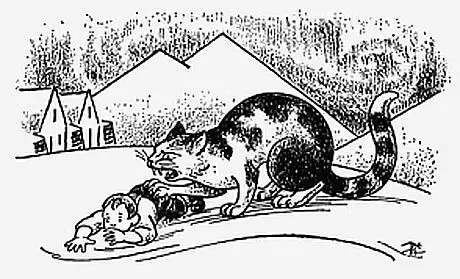
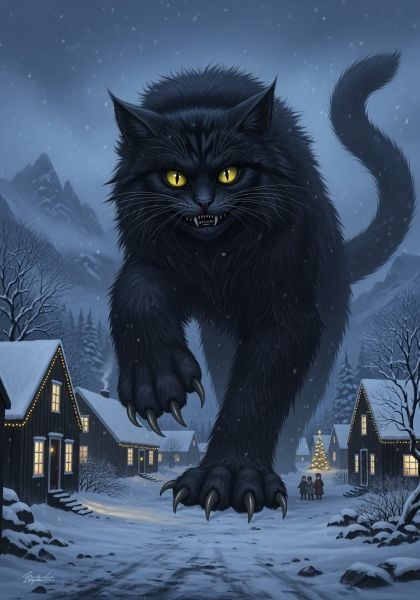
According to folklore, the Christmas cat is enormous—large enough to peer into second-story windows of farmhouses. Some descriptions paint him as a giant black cat with glowing yellow eyes that pierce through winter darkness. Others describe him as shaggy and unkempt, befitting a creature that roams the frozen countryside.
The cat is said to be visible from great distances, prowling across the snow-covered landscape, his massive silhouette a harbinger of doom for those who haven’t prepared properly for Christmas.
The Terror of Poor Children: New Clothes or Gruesome Death
The Christmas cat’s modus operandi is chillingly simple. During the Advent season leading up to Christmas, this terrible cat observes people—especially children. He watches to see who receives new clothing for Christmas and who doesn’t. Those unfortunate souls who failed to produce or receive at least one new garment would be hunted down and devoured. The term for this horrible fate was simply to be ‘claimed by the Christmas cat.’
The Wool Work Connection
To understand why new clothing was so central to this legend, you need to understand Iceland’s wool economy and the harsh realities of Icelandic winters. In Iceland’s agrarian past, wool production was the backbone of the economy and essential for survival. During the long, dark winter months, everyone in the household—including children—was expected to contribute to processing wool: carding, spinning, and knitting.
Receiving new clothing at Christmas wasn’t just a nice present—it was proof that you’d worked hard all year processing wool and contributing to your household’s survival. New socks, mittens, or a sweater demonstrated your value to the family and your willingness to work. The Christmas cat, then, was a threat specifically aimed at lazy children who shirked their wool-work duties.
This also meant the legend was particularly cruel to poor children whose families literally couldn’t afford to give them new clothes, no matter how hard they worked. Imagine the terror of a child who knew they wouldn’t receive anything new for Christmas—the fear that the Christmas cat was coming for them specifically.
Make That New Shirt or Be Torn Apart by a Cannibal Cat
Children were, of course, ‘inspired’ by this terrible threat. They would work diligently before Christmas to ensure that they would at least get a pair of socks or mittens. Parents and grandparents reinforced the message: card that wool, spin that yarn, knit those mittens—or face the consequences.
Stories about the Yule Lads or the Christmas cat were nothing more than tools of social control. Behave, or a troll will terrorize you. Work hard, or a cat will eat you. In Iceland’s unforgiving climate and subsistence economy, these weren’t just scary stories—they were cautionary tales wrapped in supernatural terror. Superstition was rife in Iceland in the past, and folklore served practical purposes.
The Christmas cat didn’t discriminate by age, either. While children were the primary targets of the threat, adults who failed to work or who didn’t receive new clothes were also supposedly fair game. The whole community was meant to be productive.
The Christmas Cat Today: From Terror to Tradition
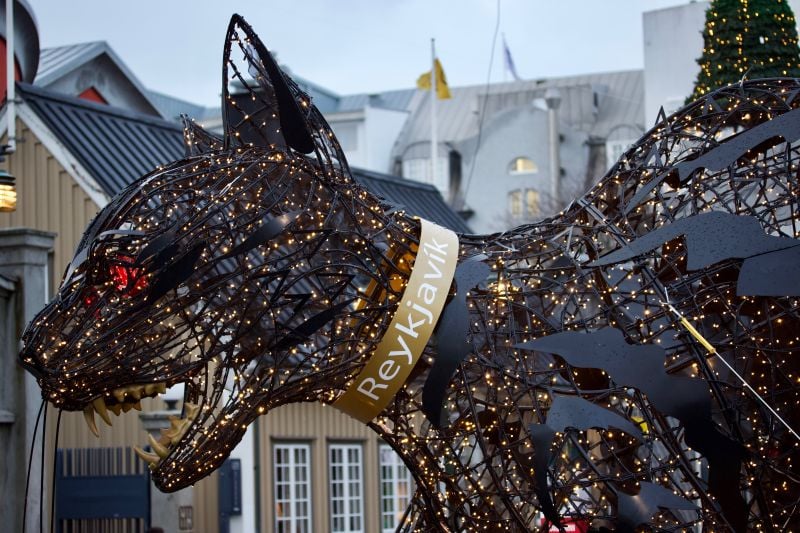
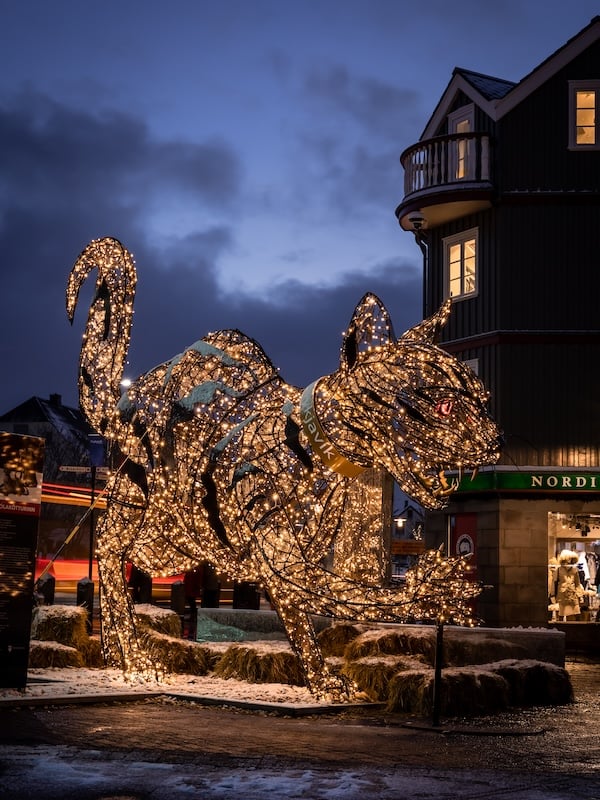
Modern Iceland has transformed the Christmas cat from pure nightmare fuel into something more whimsical—though the edge of danger remains. The cat appears on Christmas decorations, in children’s books, and as sculptures (like the one in downtown Reykjavik). Parents still reference him, though usually with a wink rather than genuine menace.
The tradition of giving clothing at Christmas remains strong in Iceland, partly because of this folklore. Most Icelanders receive or buy at least one new piece of clothing for themselves during the holidays. And many of us, even knowing it’s just a story, still make sure we get something new. I always get myself a new shirt, just in case. Why tempt fate?
Video: Björk Sings About The Icelandic Christmas Cat
The renowned Icelandic singer Björk recorded a haunting version of Jóhannes úr Kötlum’s “Jólakötturinn” poem, and it’s become something of a Christmas classic in Iceland. Her eerie rendition captures both the fairytale quality and the underlying menace of the legend.
Where to Experience Icelandic Christmas Traditions in Reykjavik
If you’re visiting Iceland during the Christmas season, you can immerse yourself in the country’s unique holiday folklore at several locations around Reykjavik and beyond.
Christmas Cat Statue in Downtown Reykjavik
The most famous representation of the Christmas cat is the sculpture in central Reykjavik, which has become a popular photo opportunity for visitors. This towering metal installation captures the creature’s menacing presence and makes for an excellent Instagram moment. You’ll find it lit up during the dark winter evenings, adding to its eerie atmosphere.
Hafnarfjörður Christmas Village
The neighboring town of Hafnarfjörður hosts an annual Christmas village where you can learn about all of Iceland’s Christmas creatures, including the Yule Lads, Grýla, and the Christmas cat. Local actors dress up as these characters, and there are storytelling sessions in English for international visitors.
The Reykjavik Christmas Market
Reykjavik’s Christmas markets, held in various locations including Ingólfstorg square, feature Christmas cat imagery on decorations, ornaments, and traditional Icelandic knitwear. It’s the perfect place to pick up that essential new piece of clothing to protect yourself from Jólakötturinn.
Icelandic Christmas Cat vs. Other Christmas Traditions
How Does the Christmas Cat Compare to Santa Claus?
While most Western children anticipate gifts from a jolly gift-giver, Icelandic children historically faced a more complex Christmas scenario. Instead of one Santa Claus, Iceland has thirteen Yule Lads who arrive one by one in the thirteen nights before Christmas, each leaving small gifts in shoes placed on windowsills—but only for children who’ve been good. Bad children get rotting potatoes.
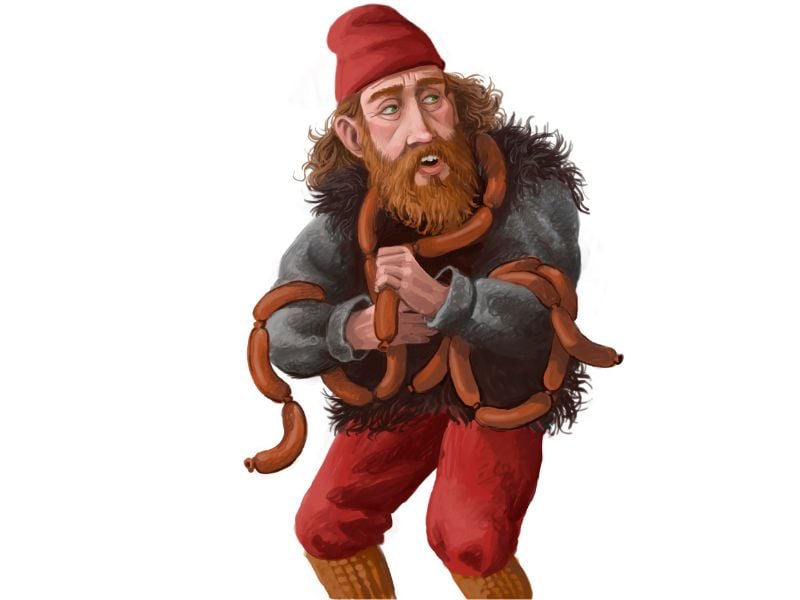
The Christmas cat adds another layer: even if you’ve been good enough for the Yule Lads, you still need new clothes to avoid being eaten. It’s a more demanding holiday system than most cultures maintain.
The Christmas Cat and Grýla: A Family Affair
The Christmas cat belongs to Iceland’s most dysfunctional family. His owner, Grýla, is a child-eating ogre who descends from the mountains during Christmas to hunt for naughty children. Her lazy husband Leppalúði stays home in their cave. Their thirteen sons, the Yule Lads, cause mischief across the country. The Christmas cat completes this terrifying household as the family pet—though calling him a “pet” seems like an understatement given his size and appetite.
Together, this family represents a complete Christmas surveillance system: Grýla monitors behavior, the Yule Lads check for goodness, and the Christmas cat ensures everyone’s been productive. There’s no escaping scrutiny in an Icelandic Christmas.
The Poem “Jólakötturinn”: Iceland’s Creepiest Christmas Carol
Jóhannes úr Kötlum’s 1932 poem “Jólakötturinn” is still recited and sung in Iceland during the Christmas season. The poem tells the story from the cat’s perspective, describing his hunger and his search for victims who haven’t received new clothes.
The poem’s tone shifts between whimsical and genuinely dark, describing how the cat’s eyes glow in the darkness and how he can see into every home. The verses about poor children who won’t receive new clothes are particularly poignant, adding a social commentary dimension to the folklore.
Björk’s haunting musical interpretation brings the poem to international audiences, her distinctive voice adding layers of both beauty and unease to the century-old words.
A Uniquely Icelandic Horror
The Christmas cat represents something quintessentially Icelandic: the ability to take a harsh reality—the absolute necessity of wool work and preparation for winter—and transform it into folklore that’s simultaneously terrifying and darkly humorous. It’s social control, economic necessity, and storytelling tradition all wrapped into one enormous, cannibalistic feline package.
The legend reflects Iceland’s historical struggles with poverty and the vital importance of wool to survival in this North Atlantic island nation. It speaks to a time when Christmas wasn’t just about celebration but about proving you’d worked hard enough to deserve survival through the winter. The Christmas cat enforced a meritocracy of labor: work hard, receive clothes, live to see another year.
But it also reveals the Icelandic character: a tendency to face harsh realities with dark humor, to create memorable stories that serve practical purposes, and to maintain cultural traditions even as their original context fades away.
Experience Authentic Icelandic Christmas Traditions
If you’re planning to visit Iceland during the Christmas season, embrace the full experience of Icelandic holiday traditions. Learn about all thirteen Yule Lads, hear the stories of Grýla and Leppalúði, and yes, make sure you’ve got something new to wear when you encounter that Christmas cat sculpture in Reykjavik.
Check out our complete guide to the thirteen Yule Lads of Iceland to learn about each of these mischievous characters and their arrival schedule. You can also read about Grýla, the child-eating Christmas ogre, to understand the full mythology of Iceland’s Christmas creatures.
And whatever you do, get yourself at least one new piece of clothing this Christmas. The Christmas cat might just be watching
Frequently Asked Questions About the Icelandic Christmas Cat
What is the Icelandic Christmas cat called in Icelandic?
The Icelandic Christmas cat is called “Jólakötturinn” in Icelandic. “Jól” means Christmas (or Yule), and “kötturinn” means “the cat.” The name is pronounced roughly like “YO-lah-KUH-tuh-rinn.
Is the Christmas cat real?
No, the Christmas cat is not real—it’s a folklore creature used historically to encourage children to work hard processing wool and to appreciate receiving new clothes at Christmas. However, the tradition is very real and continues to influence Icelandic Christmas celebrations today.
Who owns the Christmas cat?
According to folklore, the Christmas cat belongs to Grýla, the child-eating ogre who lives in the mountains with her lazy husband Leppalúði and their thirteen sons, the Yule Lads. The cat is essentially the family pet of Iceland’s most notorious troll family.
Does the Christmas cat only eat children?
No, according to the folklore, the Christmas cat will eat anyone—child or adult—who doesn’t receive new clothing for Christmas. However, the threat was primarily directed at children to encourage them to work hard at their wool-processing tasks.
What happens if you don’t get new clothes for Christmas in Iceland?
In folklore, you would be “claimed” by the Christmas cat—meaning he would hunt you down and eat you. In modern Iceland, of course, nothing happens except that you might get some gentle teasing about the Christmas cat coming for you. But many Icelanders still make sure to give and receive at least one new clothing item at Christmas, keeping the tradition alive.
When does the Christmas cat appear?
The Christmas cat prowls during the Advent season and through Christmas, with Christmas Eve being his primary hunting night. He’s said to observe people throughout December to see who’s receiving new clothes and who isn’t.
Can you see Christmas cat decorations in Iceland?
Yes! The Christmas cat appears on Christmas decorations, in shop windows, on greeting cards, and as public sculptures throughout Iceland during the Christmas season. The most famous is the large Christmas cat sculpture in central Reykjavik.
How do you say “Merry Christmas” in Icelandic?
While we’re on the topic of Icelandic Christmas, “Merry Christmas” in Icelandic is “Gleðileg jól” (pronounced roughly “GLEH-thee-leh YOH-l”). You might need to know this when you’re buying that protective new sweater!
Sponsored link: Custom Icelandic Christmas Cat Pin
The Icelandic Christmas cat pattern is a traditional Icelandic design associated with Christmas. Applying this characteristic element to a pin on EnamelPins.com can be used as a clothing accessory or given as a gift to others. It can not only increase its fun and uniqueness, but also make it more fun and unique. You can feel the charm of Icelandic culture in your life, bringing pleasure and novelty, adding to the Christmas atmosphere.