


Join 8,000 Iceland Travel Fans & Unlock Exclusive Discounts
Subscribe and instantly receive free discount codes for tours, car rentals, camper vans, and outdoor gear — carefully hand-picked to help you save on your Iceland adventure.
- ✔ Instant access to exclusive discount codes
- ✔ Savings on tours, car and camper rentals
- ✔ Tips and inspiration for planning your Iceland trip
It’s that time again—time to sit down with my good friend Sævar Helgi Bragason, Iceland’s stargazer-in-chief. He’s the person I always turn to when the spectacular Icelandic aurora is set to dance across the sky. Readers will remember Sævar from our previous conversations about stargazing and the deep dive we took into the 2026 solar eclipse.
Well, Sævar hasn’t been sitting still. He’s been hard at work perfecting his latest creation: Iceland at Night. This website is dedicated to helping aurora chasers and night sky enthusiasts make the most of their time in Iceland. And with the total solar eclipse now less than a year away, preparations across Iceland are ramping up.
So I invited Sævar back to catch up on what’s new, what’s improved, and what travelers need to know as we head into one of the most exciting periods for celestial events in Iceland’s history. Grab your coffee and settle in—because when Sævar talks about the sky, magic happens.
Book a hotel and a flight to Iceland
Welcome back, Sævar! Last time we spoke, you mentioned you were working on Iceland at Night. Can you tell us what inspired you to create it and what makes it unique for people hunting the Northern Lights in Iceland?
Sure thing! I made the Iceland at Night website to help me catch the Northern Lights in Iceland. I’m outside almost every clear night assisting people to catch the aurora and see the stars. I’m not a big fan of some of the aurora apps available; they all show pretty much the same thing, but lack helpful information on local weather conditions. That’s why icelandatnight.It features the local cloud-cover forecast and satellite images for real-time comparison, as forecasts can be inaccurate. Clear or partly clear skies are essential to see the aurora. The site also emphasises real-time space weather data and local magnetic data, which is key to knowing when to be outside and look up. The goal is to simplify the data and make the site and future app a one-stop place for everyone chasing aurora in Iceland – even elsewhere, too.
Can you walk us through how Iceland at Night actually works? What should someone look at when they visit the site, and how does it help them decide whether to go aurora hunting tonight or stay cozy in their hotel?
When you visit Iceland at Night, the first thing you see is the local cloud cover forecast. Different colours represent different cloud layers. Now I know that might not be very clear, but it’s what we currently have. In the future, we’ll make it simpler. You can use the bar to see what the forecast looks like for the next three nights. You can also see Sat and Sat 2, which show two different satellite views for comparison. It can be extremely useful when you are driving towards an area that might be clear.
Next to the cloud cover map, you find Tonight’s outlook. It’s updated every day and summarises how tonight is likely to look based on many different models I look at. Below that are numbers that show current activity. Scroll down, and you’ll find real-time space weather data, which is very important to watch while you are out in the field.
So before you head out, check the cloud cover forecast for your area. If clear or partly clear, definitely head out. Check the space weather data, especially the Bz value.
You’ve mentioned the importance of real-time space weather data on the site. particularly the Bz value. Can you explain what that means, and is it such a game-changer for Northern Lights viewing?
One of the biggest mistakes people make while chasing aurora is relying on the Kp-index forecast. To be honest, the Kp-index is almost useless for predicting aurora, as it is not an aurora forecast. At best, it can give a rough estimate of what to expect. That’s why we don’t emphasize the Kp-index on Iceland at Night.
Particles of the solar wind cause aurora. The speed of the solar wind and its embedded magnetic field and strength are key parameters to look for. The Bz value shows its polarity; in other words, if its embedded magnetic field lines are pointing north or south. Simplified, it’s almost like an on-off switch for Aurora. When north, particles of the solar wind cannot efficiently link up with our atmosphere and are repelled back into space. That means Aurora would be weak most of the time.
The Bz value explained
When the Bz points south, however, the solar wind is able to link up with Earth’s magnetic field and crack it open, allowing particles to stream into it. Earth’s magnetic field lines reconnect on the nighttime side of the Earth. When it happens, the particles stuck in the line are funnelled along the field lines towards the polar regions and form aurora.
Now, the aurora becomes bright and dynamic during what is called an auroral substorm. When the Bz value has been negative or south for an extended period of time, energy builds up in our magnetic field and eventually gets released as an auroral substorm. During substorms, the aurora finally gets bright enough for colours to be easily seen. That’s when they move around quickly for an unforgettable sight. So when you see the Bz become negative, you know an aurora is very likely to appear in the sky soon.
The Kp-index cannot predict when these substorms will occur. It also doesn’t describe how bright or intense the aurora will get.
Another number to keep an eye on is called the Hemispheric Power Index or HPI. The higher the number, the better.
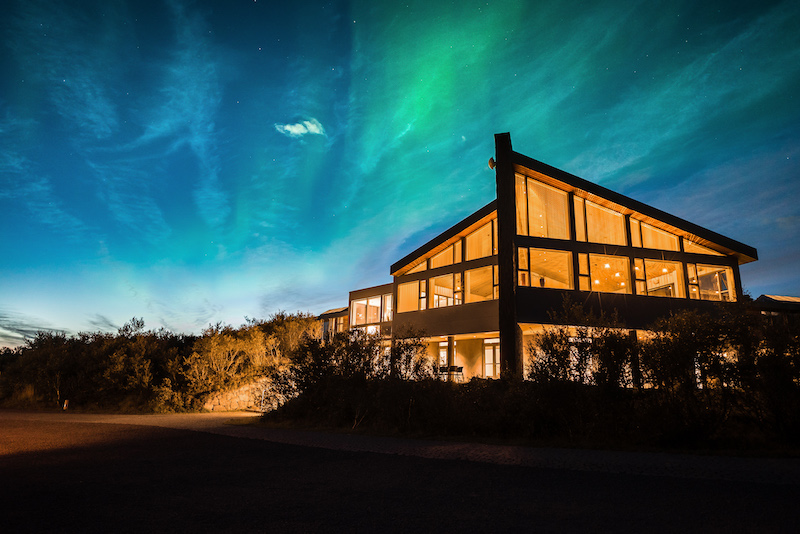
We’re now less than ten months away from the total solar eclipse on August 12, 2026! Last time we talked, you were in the early planning stages. What’s been happening behind the scenes? How are Iceland and the astronomy community preparing for what promises to be an astronomical invasion of eclipse chasers?
A tremendous amount of work has been going on behind the scenes. Mostly to simply just wake people up, cause most don’t know how much of a frenzy it will be, not only because of a large number of eclipse chasers and travelers, but also due to local interest.
Fortunately, it seems that work has finally paid off as preparations have started. Most of it has to do with figuring out logistics as we expect some roads to become congested, especially if the weather is good in one location but unfavourable in others within the path of totality. Educating the authorities and municipalities has been the number one issue.
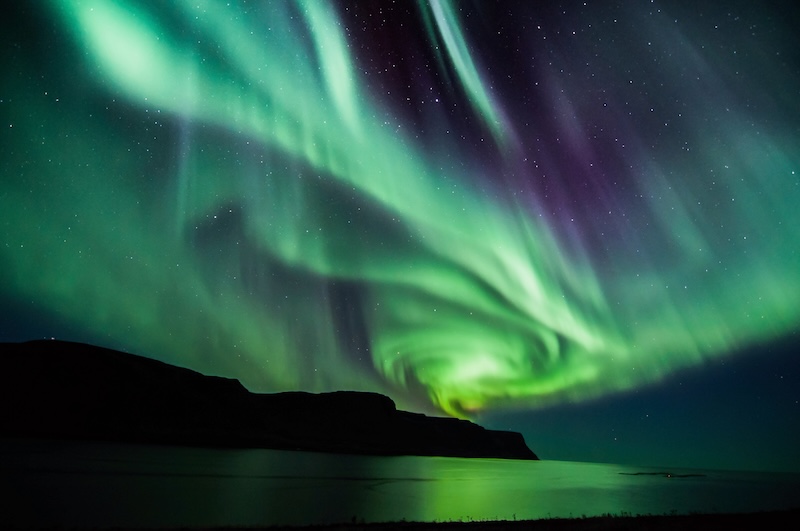
We’ll be undertaking many educational and outreach projects for children and adults. I look forward to sharing that with everyone when the date draws closer.
The eclipse will be absolutely amazing, no matter what. And I am trying my best to make sure we’ll be as prepared as possible.
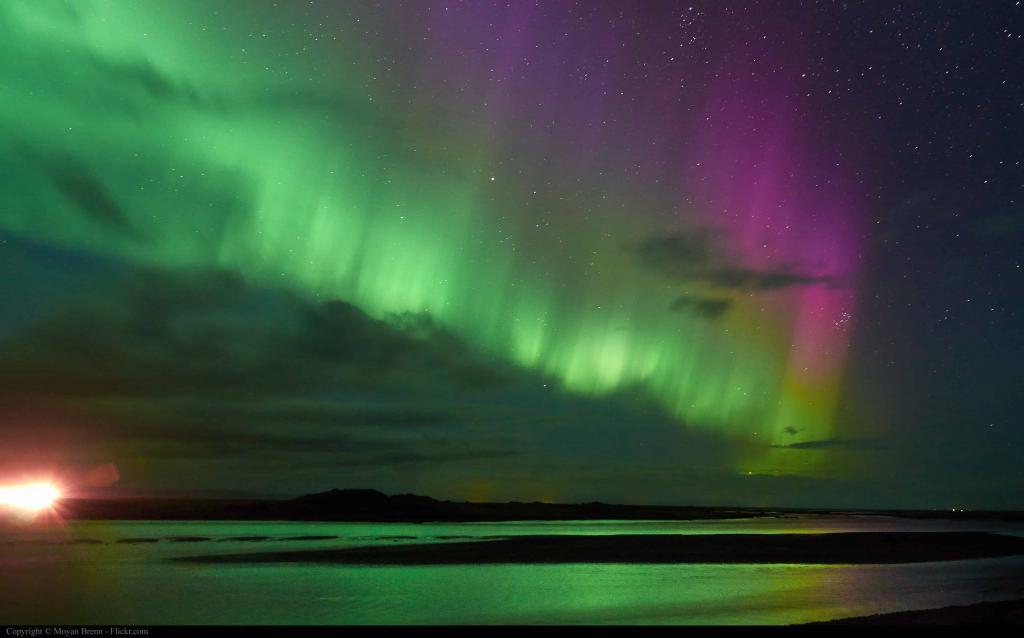
This is a special period for Iceland’s night sky—we’re heading toward solar maximum, the aurora season has started, and the eclipse is coming next summer. If someone could only visit Iceland once in the next two years for celestial phenomena, what would you recommend, and when should they come?
From the bottom of my heart, come for the eclipse, stay for the wonders of Iceland afterwards. A total solar eclipse is just such a unique and amazing experience, especially in an otherworldly place, surrounded by lava fields, glacially carved fjords, and even a glacier.
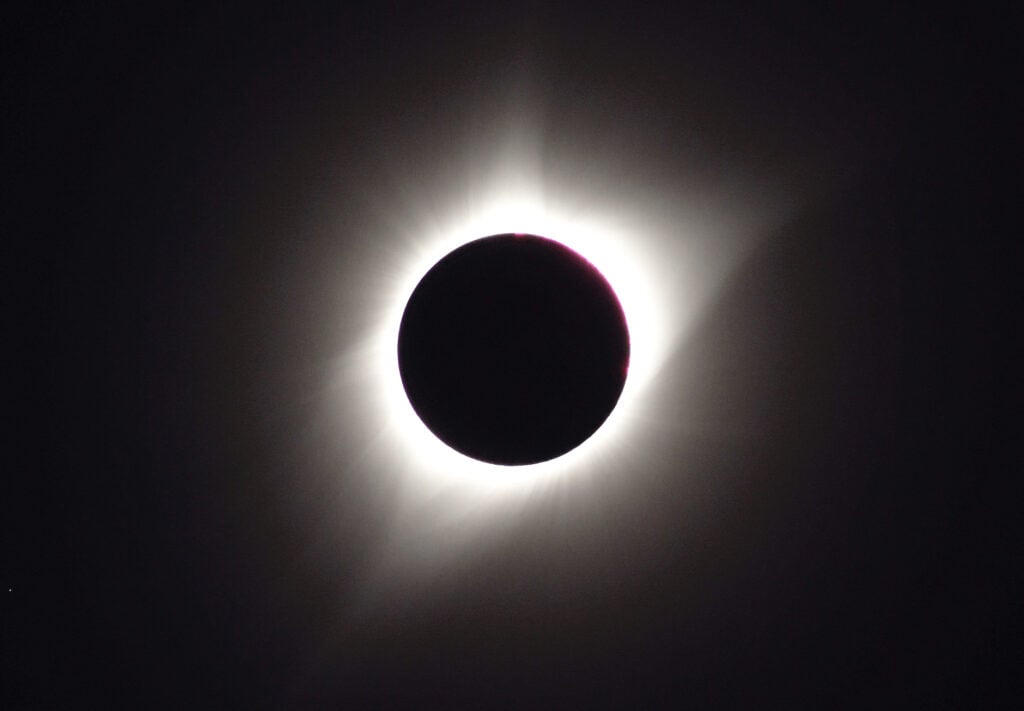
Around the eclipse, you can catch the early beginning of the aurora season. It gets sufficiently dark shortly after midnight to see the Northern Lights around August 12. It’s also the end of the noctilucent cloud season, and on August 12, the Perseid meteor shower peaks.
Iceland is amazing in late summer, especially the highlands. It’s my favorite time of year. Midnight is especially magical. The weather is often calm, so you’ll hear the birds sing, the murmur of a distant river or a waterfall, and beautiful colours in the sky.
And, the good thing is, the likeliest years to see aurora are from now and the next few years. We know for a fact, based on decades of rigorous observations, that the Northern Lights are most frequent in the years after solar maximum, during the descending part of the 11-year solar cycle.